


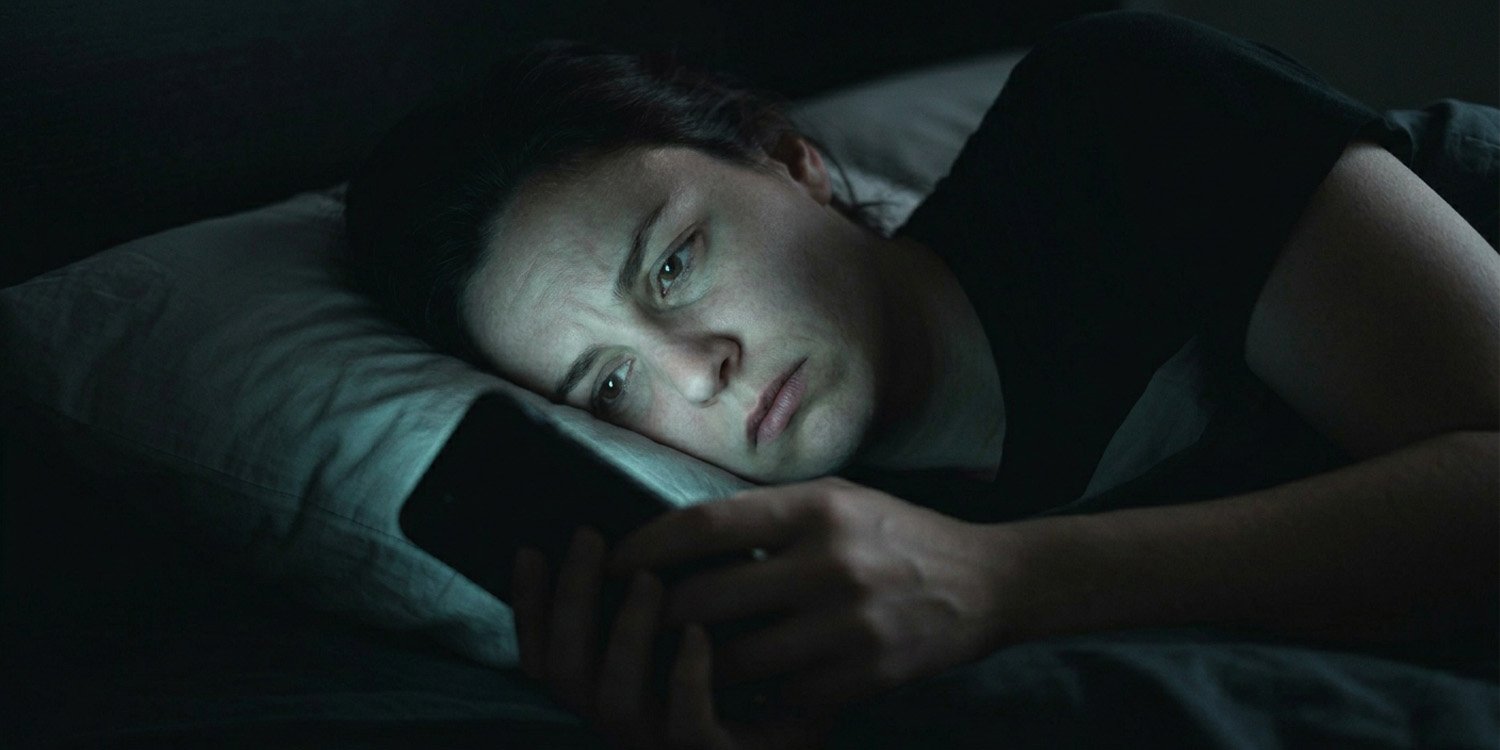
People who stay up later than planned may have weak physiological self-control. New research published in Journal of Health Psychology It is associated with decreased heart rate variability and increased bedtime procrastination.
Many people experience the temptation to prolong their use of digital devices or complete additional tasks even when they know they should go to bed. This is a behavior known as bedtime procrastination. Scientists have long linked bedtime procrastination to difficulty managing behavior and emotions. It is thought that people who have a hard time prioritizing long-term well-being over short-term pleasure, or who have difficulty regulating negative emotions, are more likely to postpone their bedtime.
What is less well understood is whether there are also measurable biological markers for this tendency. A promising candidate is heart rate variability (HRV), defined as the natural variation in the time between heartbeats. Previous research has demonstrated that this variability, particularly higher levels of the component triggered by the body’s calming “rest and digest” nervous system (vagus nerve), is associated with greater adaptability to stress and greater self-control.
Therefore, researchers in this study sought to investigate whether this physiological marker, along with self-reported difficulty managing behaviors and emotions, could predict how much a person tends to procrastinate at bedtime.
Lena Marine Grabo and Silja Bellingrad of the University of Duisburg-Essen in Germany recruited 135 adults between the ages of 18 and 82 (the average age was about 29, and about 65% were women). Participants first sat quietly for 10 minutes while their heart rate was continuously measured using an accurate chest strap device. From this recording, the researchers calculated each person’s baseline level of heart rate variability.
Participants also filled out questionnaires reporting on how often they procrastinated at bedtime, how well they managed their behavior and emotions, and how often they engaged in certain thinking styles. These thinking styles included a tendency to “think” (falling into passive, repetitive, negative thought loops) versus “contemplative” (thinking purposefully to solve problems).
The results demonstrated a clear picture in which bedtime procrastination simultaneously reflects challenges across multiple different aspects of self-control. People who scored high on bedtime procrastination tended to have lower heart rate variability, more difficulty regulating their behavior, and more difficulty managing their emotions. Importantly, each of these three factors independently contributed to predicting bedtime procrastination.
When analyzing the specific ways people deal with emotions, a nuanced picture emerges. Using “cognitive reappraisal” – a deliberate strategy to reframe stressful situations in a more positive light – initially appeared to reduce bedtime procrastination, but lost its predictive power when other emotional habits were taken into account. Finally, in the final model, only “worrying” significantly predicted bedtime procrastination. Conversely, more reflective, problem-focused thinking was not associated with delayed sleep.
The study also found that postponing bedtime was moderately associated with both shorter sleep duration and poorer sleep quality, supporting how this habit impacts a night’s rest.
Interestingly, this study found no significant association between a person’s biological heart rate variability and self-reported measures of behavioral and emotional regulation. This suggests that the different components of the self-regulatory system operate somewhat independently, even though they all contribute to the same behavioral outcome.
“Taken together, these findings highlight that bedtime procrastination is a problem of poor self-regulation, reflected in both physiological (lower heart rate variability) and psychological (lower behavioral and emotional regulation) domains, but also suggest that self-regulation is not a single construct,” Grabo and Bellingrath concluded.
Some limitations should be noted. For example, the researchers cautioned that the study was conducted at one point in time and cannot reveal exact cause-and-effect relationships. A two-way loop can occur in which low self-control leads to procrastinating in bedtime, leading to poor sleep, which in turn leads to even lower self-control the next day.
The study, “Bedtime procrastination as a classic problem in self-regulation? Insights from investigating heart rate variability, behavioral regulation, and emotional regulation,” was authored by Lena Mareen Grabo and Silja Bellingrath.
