


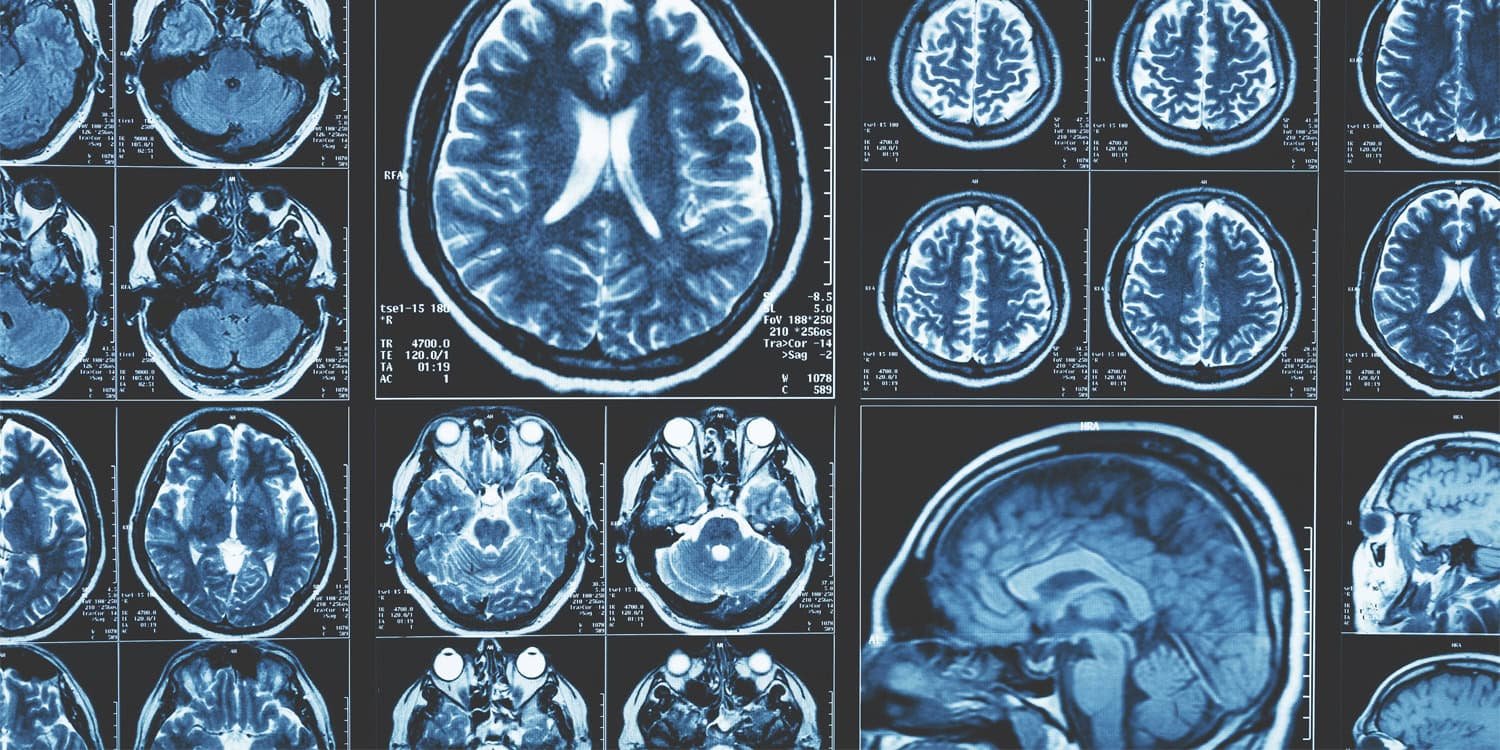
Researchers in Singapore detected a significant spike in autoantibodies associated with brain inflammation during the first year of the COVID-19 pandemic. Incidence rates have since fallen to pre-pandemic levels, a trend scientists attribute to widespread vaccination efforts and the emergence of less severe virus variants. The research results were published in a magazine brain and behavior.
When a person is infected with a virus, the immune system produces targeting proteins called antibodies to fight off the invader. After the infection subsides, the immune response usually wanes. In rare cases, this system may fail. The body produces autoantibodies that mistakenly attack its own healthy tissue.
When these errant antibodies target the brain, the resulting condition is known as autoimmune encephalitis. Patients with this disorder experience severe inflammation in the central nervous system. This can cause a wide range of devastating symptoms, including memory loss, sudden changes in personality, hallucinations, and seizures.
Medical professionals have long known that certain viral infections can trigger autoimmune encephalitis. A classic example is the herpes simplex virus. This can prompt the immune system to attack special brain receptors even after the initial infection has passed. Early in the coronavirus crisis, doctors began reporting isolated cases of autoantibody attacks in patients who had just recovered from the coronavirus.
To understand whether this is a widespread phenomenon, researchers needed to look at population-level laboratory data. Tianrong Yeo, a neurologist at the National Institute of Neuroscience in Singapore, and colleagues designed a study to assess regional testing trends. Their aim was to see if the incidence of certain antibodies that attack the brain increased with the emergence of the coronavirus.
The researchers also decided to look at a second category of diseases known as paraneoplastic neurological syndromes. These conditions cause similar symptoms and mimic virus-induced autoimmune encephalitis. However, they are not caused by an infection but by an immune response to the underlying cancerous tumor. The researchers hypothesized that if the virus was causing the surge in autoimmune brain inflammation, the incidence of cancer-related inflammatory conditions should be completely unaffected.
To test this idea, the team conducted a retrospective analysis of laboratory tests. The National Institute of Neuroscience handles diagnostic samples from health facilities that cover about three-quarters of Singapore’s population. This provided a vast dataset to examine long-term trends before and during the pandemic.
Researchers collected data on serum and cerebrospinal fluid samples tested between 2017 and 2023. They looked for the presence of specific autoantibodies known to target the outer surfaces of brain cells. They also looked for another set of autoantibodies known to attack the inside of cells, a key feature of cancer-related neurological syndromes.
To eliminate false positive results, the research team employed incredibly stringent conditions. For a particular autoantibody, a patient’s sample was counted as positive only if the marker was found directly in the cerebrospinal fluid, another fluid that bathes and protects the brain. For others, samples had to test positive in two very different types of laboratory tests. If a patient provided multiple samples over an extended period of time, only the first positive result was recorded to avoid duplicate counts.
The team then calculated incidence using a metric known as person-years. This is a statistical measure that takes into account both the number of people observed and the amount of time they were observed. This allows scientists to accurately compare how often diseases occur over different time periods and changes in population size.
From 2017 to 2023, the institute tested more than 4,000 individual samples for autoantibodies that target brain surface proteins. Of this large pool, 87 samples met the strict threshold for a positive result. When researchers graphed these positive results over time, they noticed a clear pattern.
In the three years before the pandemic, the incidence of these autoantibodies hovered around 2.44 cases per million person-years. In 2020, the first year of the global virus pandemic, the number of infections soared to 4.92 per million person-years. The most common type of autoantibody found in this spike targeted specific protein structures in the brain called NMDA receptors, which are responsible for memory and learning functions.
The research team considers this sudden doubling as evidence of a biological link between the coronavirus and autoimmune brain inflammation. They propose two main mechanisms that may explain this relationship. The first is molecular mimicry, a scenario in which the proteins on the outside of the coronavirus are so similar to the proteins on the outside of human brain cells that the immune system is fundamentally confused.
The second proposed mechanism is related to widespread internal inflammation. Severe coronavirus infections can cause a massive release of inflammatory molecules throughout the body. These molecules damage the protective boundary between the bloodstream and the brain, allowing rogue immune cells to invade inside and wreak havoc.
Following the initial surge in 2020, the incidence of these autoantibodies has decreased. From 2021 to 2023, this rate remained at approximately 2.74 cases per million person-years. The researchers noted that while this decline is visually evident on the graph, the difference between the 2020 peak and subsequent pandemic years is not statistically significant.
Researchers suspect that the successful rollout of the vaccination program played a major role in reducing the number of infections. Vaccines train the immune system in a safer environment and limit the severity of future infections. By the end of 2021, the majority of Singapore’s population had received at least two doses of the vaccine. As the viral load in a community decreases, the likelihood of the virus triggering an extreme autoimmune response is thought to be significantly reduced.
Natural evolution of the virus may also have contributed to the decline. As the pandemic progressed, the original strain of the coronavirus was replaced by variants that spread faster but generally have milder symptoms. These newer viral iterations may be less capable of causing autoimmune dysfunction.
Data on cancer-related neurological syndromes, on the other hand, performed as the researchers predicted. The team found 29 positive samples from more than 3,000 tests. Rather than spiking during the pandemic, the incidence of these specific autoantibodies increased slowly and steadily from 2019 to 2023 on a linear upward trajectory.
The steady increase in cancer-related autoantibodies is thought to reflect growing awareness among doctors, who are now ordering specialized tests more frequently than in the past. Above all, the complete lack of sudden spikes in 2020 strengthens the idea that these particular syndromes function independently of viral outbreaks.
Although the data reveal important trends, this study has several limitations. The researchers conducted an observational analysis based purely on laboratory records. They did not have access to the complete clinical history or direct physical assessment of the patients whose samples were tested.
Because of this physical barrier, the research team could not confirm whether patients who tested positive for autoantibodies had been suffering from a confirmed coronavirus infection immediately before their specific neurological symptoms. They also could not completely rule out the possibility that some of the rapidly developing cases in 2020 were actually caused by undiscovered tumors. Researchers had to rely on generalized group trends rather than case-by-case evidence.
Despite strict testing standards, there is always a small risk of a false positive result with chemical tests. The research team noted that the testing method was completely uniform throughout the study period. It is highly unlikely that a sudden change in the number of positive samples is the result of a sudden spike in testing errors.
The lead researchers hope their findings will encourage medical professionals to remain vigilant about the secondary effects of viral outbreaks. The human immune system is incredibly powerful, and its biological mistakes can cause permanent neurological damage. As the virus that causes COVID-19 becomes a permanent part of the respiratory disease spectrum, being on the lookout for unusual neurological symptoms will continue to be a top priority in hospital care.
The study, “The impact of the COVID-19 outbreak on the incidence of autoimmune encephalitis and paraneoplastic neurological syndrome-related antibodies in Singapore,” was authored by Rui Ling Rena Lau, Karine Su Shan Tay, Seyed Ehsan Saffari, Patricia Yut Wan Wong, Mei Ting Lim, Angelia Swee Hoon Koe, Jeanne May May Tan, and Kok Pin Yong. Kevin Tan, Josiah Yui Hui Chai, Tianlong Yeo.
