


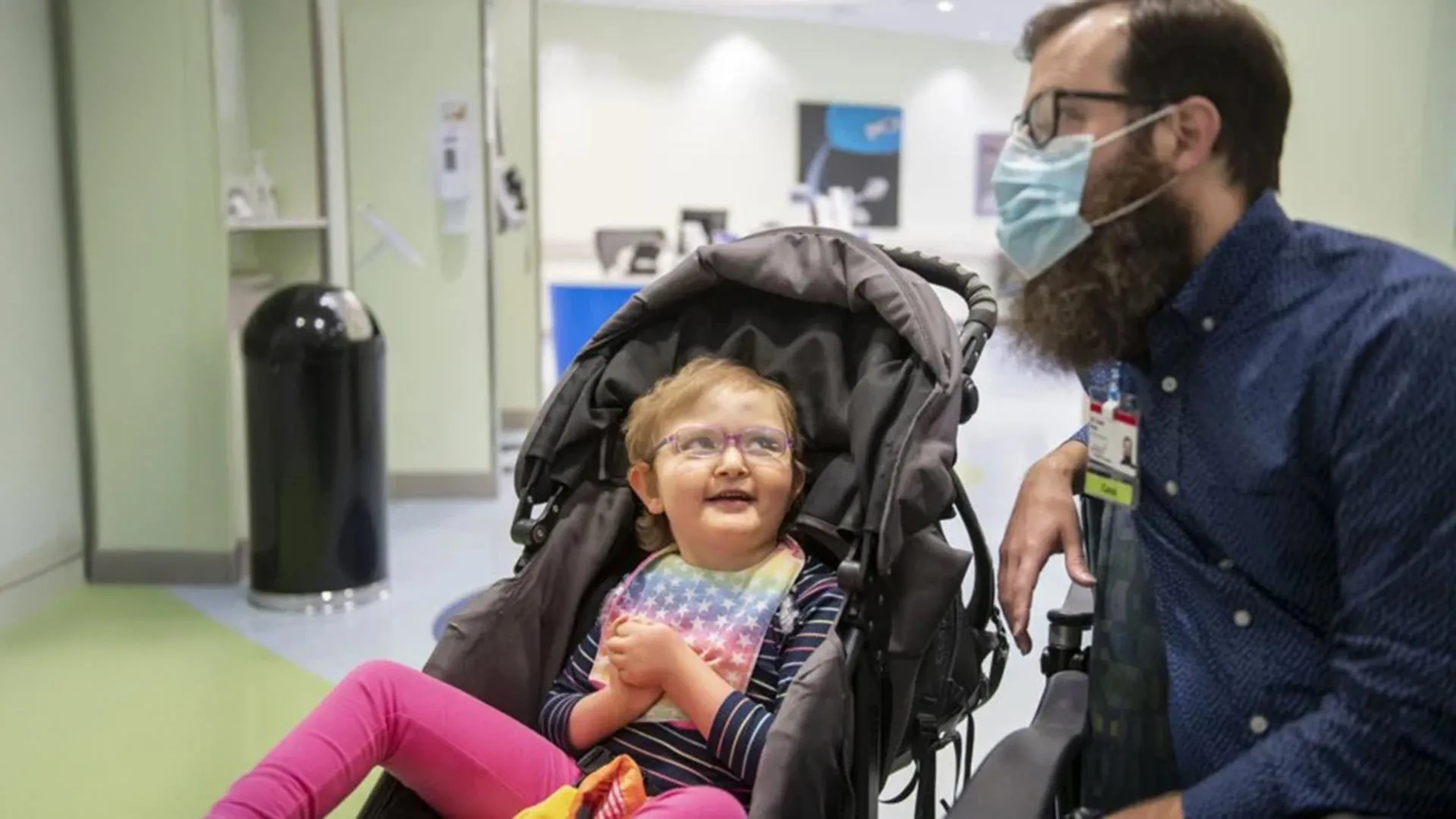
A drug that has been around for decades and used to treat several conditions, including chronic parasitic infections, is now emerging as a potential option for patients with another, much rarer disease. Early research results suggest the drug may help people with Bachman-Bupp syndrome (BABS), a life-threatening genetic disease that affects only a small number of people worldwide.
This progress is being driven by a new collaboration between Corewell Health, Michigan State University, and Every Cure, a nonprofit biotechnology group focused on finding new uses for existing drugs.
“In addition to helping build preclinical studies and retrospective analyses, the Every Cure team has already begun helping patients navigate regulatory pathways and compliance at many levels in hopes of treating more BABS patients,” said Caleb Bapp, MD, a pediatric geneticist at Corewell Health Helen DeVos Children’s Hospital in Grand Rapids, Michigan. “They are opening doors that we could never open. This is a hopeful and exciting time for all of us, and more importantly, for our patients.”
What is DFMO and how does it work?
This drug, called difluoromethylornithine, also known as DFMO or eflornithine, has a long history in medicine. It has been used to treat West African sleeping sickness, a chronic disease spread by the tsetse fly. It is also used to reduce unwanted facial hair in women and prevent recurrence of neuroblastoma.
Researchers at Corewell Health and Michigan State University College of Human Medicine have identified another potential use. They found that DFMO may be helpful in treating Bachmann-Bupp syndrome, and have already administered DFMO to a small number of patients through an FDA-approved single-patient clinical trial protocol.
Understanding Bachman Bap Syndrome (BABS)
BABS is caused by gain-of-function mutations in ornithine decarboxylase (ODC1 gene). These mutations cause severe developmental problems, including severe developmental delays, decreased muscle tone, and hair loss.
DFMO targets this pathway directly. It works by inhibiting the ODC protein, reducing excessive enzyme activity caused by mutated genes. In the limited number of patients treated so far, this approach has led to improvement in some symptoms.
“I have been studying DFMO and its effect on the ODC1 gene for 30 years, including its clinical use in pediatric neuroblastoma,” said Dr. Andre Bachmann, professor of pediatrics at MSU who collaborated with Dr. Bapp to first identify BABS in patients. “A chance encounter with Dr. Bupp led us to use DFMO in one patient, and now five others, with early and promising results.”
Challenges slowing progress
Despite early promising results, advancing this potential treatment has not been easy. The condition itself is extremely rare, with only about 20 cases reported worldwide, making it difficult to raise awareness and plan large-scale studies.
Regulatory requirements and the complexity of initiating clinical trials are also slowing progress. Although the Food and Drug Administration has encouraged them, important hurdles remain before Bupp and Bachmann can move forward with a formal trial, including defining study goals and reaching enough patients.
“For the past year, we have been at an impasse in terms of advancing DFMO therapy,” Dr. Bapp said.
New partnership aims to accelerate research
All Cures are stepping in to address these obstacles. The organization works to strengthen scientific evidence, raise awareness among physicians and rare disease groups, and support systems to ensure patients are appropriately identified and treated as research continues.
“Our role is to bridge this gap by strengthening the evidence behind BABS and DFMO through preclinical research, raising awareness among physicians and the rare disease community, and ensuring that no child goes undiagnosed or untreated,” said David Fagenbaum, M.D., co-founder and president of Every Cure.
The three groups have already begun building on years of prior research led by Drs. Mr. Bachman and Mr. Bappu, Corewell Health physician Dr. Surender Rajasekaran, and other collaborators. Preclinical studies are scheduled to begin next year and are an important step toward potentially making this treatment available to more patients.
