


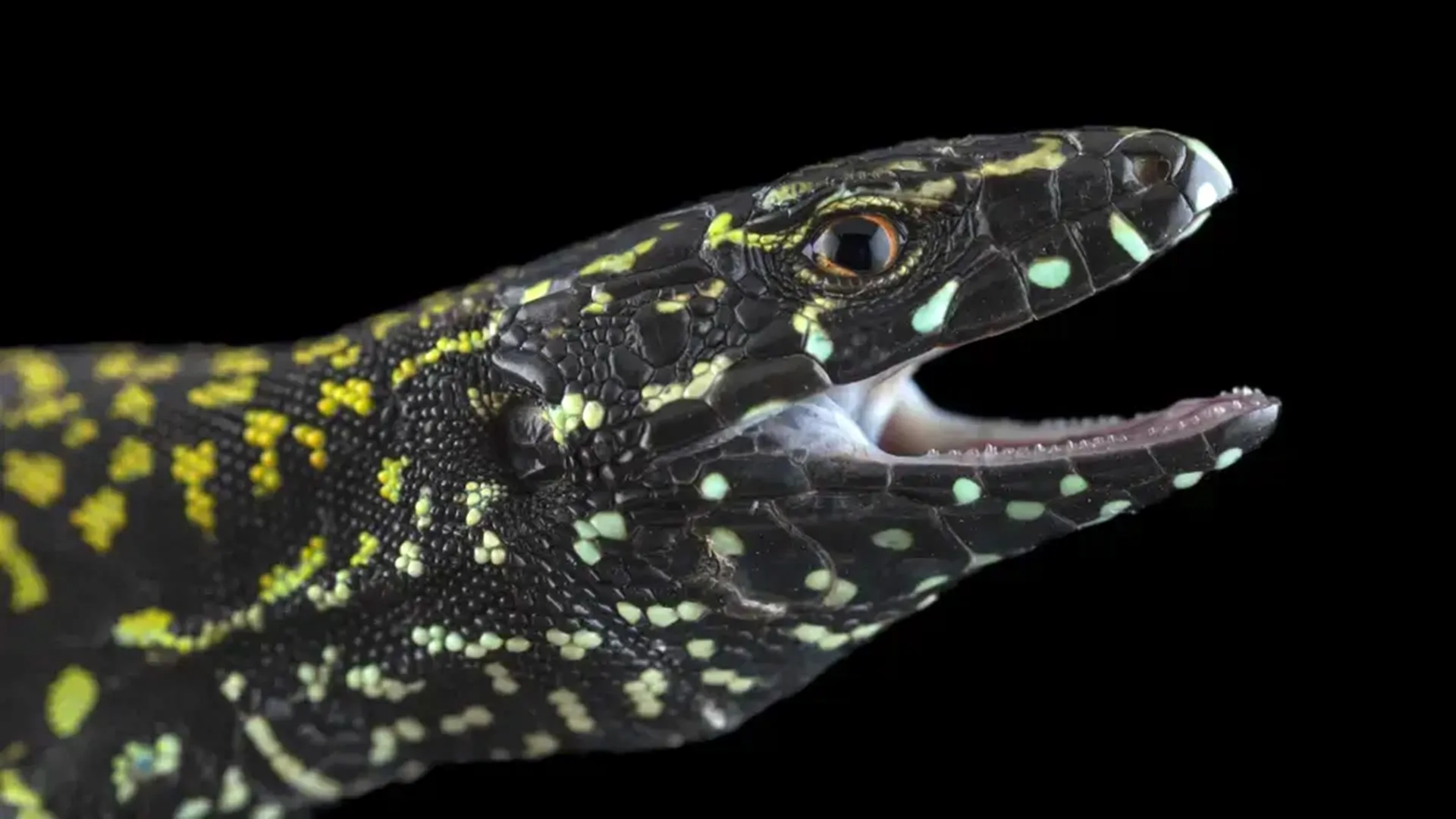
For millions of years, a mixture of bright colors persisted within a single lizard species. Today, much of that diversity has disappeared in an incredibly short period of time. Researchers point to an unexpected cause. It is a bold green, highly aggressive and dominant wall lizard that rapidly eliminated several colored forms within its species.
In many animal species, distinct color types known as color morphs are more than just visual differences. These changes often reflect different approaches to survival, such as how individuals compete for territory or attract mates. Each color can represent a unique strategy that helps maintain balance within the population.
Balance over the years of wall lizards
Common wall lizard (mural podarsis) is widespread throughout the Mediterranean and has long been a classic example of this balance. Usually, people have one of three throat colors: white, yellow, or orange. For millions of years, these color forms coexisted within the same population, maintaining a stable evolutionary system.
That stability is now crumbling. A new study led by researchers at Lund University and published in the journal Science shows that this once-reliable balance has been disrupted.
“We are seeing how the coexistence of several different color forms, which has been stable for millions of years, is being lost over a very short evolutionary time scale,” said Tobias Uller, professor of evolutionary biology at Lund University.
Data from over 10,000 lizards
To understand what’s going on, researchers looked at color patterns in about 240 populations and analyzed more than 10,000 lizards. The results were clear. A group known informally as “hulk” lizards has changed dynamics within the species.
These larger, more aggressive lizards were recognized for their striking appearance and quickly spread. Yellow- and orange-throated varieties are disappearing as they expand into new areas. In many places only the white form remains.
“Aggressive behavior disrupts the finely tuned social system that previously allowed multiple color strategies to coexist,” says Tobias Uller.
Evolution can change rapidly
This study highlights that even long-lasting evolutionary systems can be fragile. Although evolution is often thought of as a slow, gradual process, this case shows that it can also change rapidly when circumstances change.
A single dominant trait can restructure competition and change the balance within a species in a short period of time.
“By showing how color variations that have coexisted for millions of years disappear, we can now better understand how the emergence of new traits changes competition in nature,” concludes Tobias Uller.
