


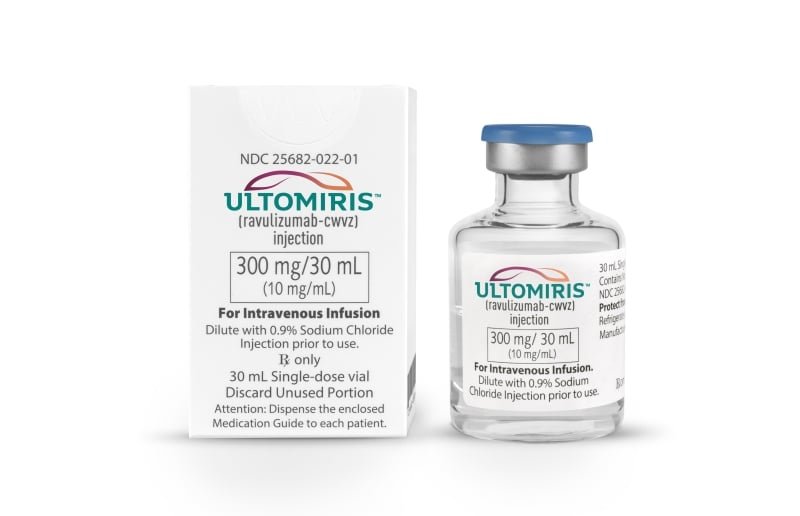
AstraZeneca’s Ultomiris, already approved for the treatment of four rare diseases, has also shown potential in another rare disease, IgA nephropathy (IgAN).
In a Phase 3 study in adults at risk of developing kidney disease, Ultomiris produced clinically meaningful and statistically significant reductions in urinary protein after 34 weeks, AZ announced Tuesday. According to the company, a reduction in proteinuria was already evident after 10 weeks of treatment.
Interim results indicate that the study met one of its two primary endpoints. The other primary endpoint, change from baseline in estimated glomerular filtration rate (eGFR), will be assessed at week 106.
AZ said that while the trial is moving towards completion, it will aim for early approval of the indication and present the trial results at a future medical conference.
The IgAN field is increasingly crowded with drugs from Cariditas Therapeutics, Travele Therapeutics, Novartis, and Otsuka Pharmaceuticals, all of which have accelerated initial approvals based on proteinuria data.
The trial randomly assigned more than 500 participants to receive either Ultomiris or a placebo intravenously. Patients in the treatment group received a loading dose of Ultomiris on day 1, followed by regular weight-based maintenance doses starting on day 15, and then every 8 weeks until a blind period of 106 weeks.
IgAN is an inflammatory kidney disease in which abnormal proteins build up in the kidneys, causing inflammation that limits their ability to filter blood. IgAN can lead to chronic kidney disease, eventually requiring dialysis or transplantation. Of the 560,000 people diagnosed with IgAN in the US, five EU countries and Japan, 60% are eligible for treatment, AZ said.
Jonathan Barratt, MD, a professor at the University of Leicester and principal investigator, said in a statement that as a C5 inhibitor, Ultomiris can inhibit “terminal complement activation,” which is “a central driver of kidney inflammation in IgAN.”
That mechanism requires Ultomiris to compete directly with Novartis’ complement inhibitor Favalta, which has recently been shown to have the potential to slow the decline in kidney function and the progression of IgAN as measured by changes in eGFR.
Ultomiris was one of the key drugs AZ acquired in its $39 billion acquisition of Alexion in 2020. By that time, the FDA had already approved Ultomiris to treat the blood disorders paroxysmal nocturnal hemoglobinuria (PNH) and atypical hemolytic uremic syndrome (AHUS).
In the past four years, the FDA has approved Ultomiris for the treatment of the autoimmune diseases generalized myasthenia gravis (gMG) and neuromyelitis optica spectrum disorder (NMOSD).
Last year, Ultomiris generated $4.7 billion in worldwide sales (PDF), a 19% increase from 2024.
