


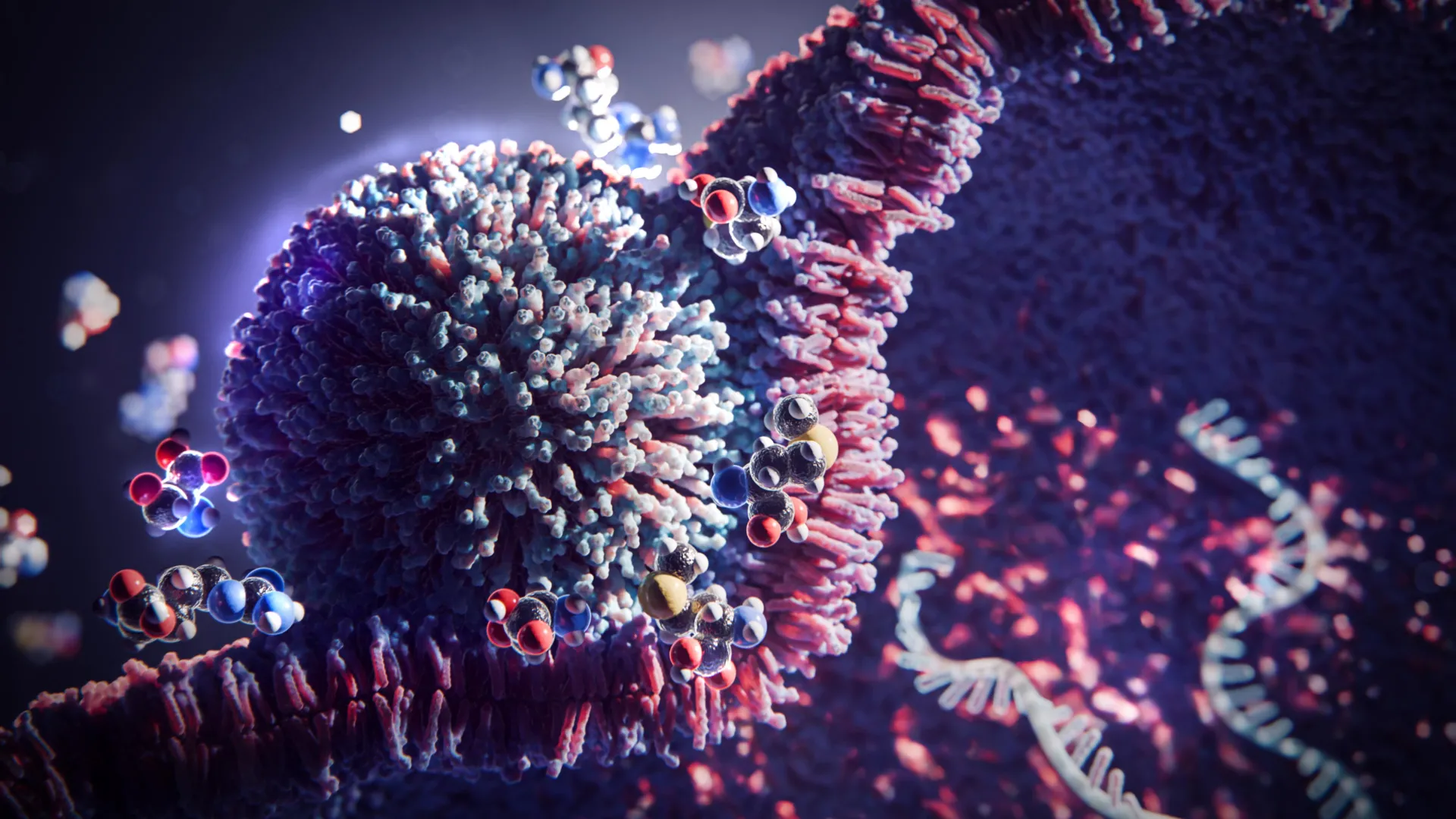
Lipid nanoparticles (LNPs) are best known for their role in the delivery of COVID-19 mRNA vaccines that have been administered to billions of people. Now, scientists are expanding its use far beyond vaccines. Researchers are working on using these small carriers to deliver therapeutic mRNA into cells for cancer treatment, inflammatory diseases, and even CRISPR systems designed to repair harmful genetic mutations.
But progress is slowed by persistent challenges. For LNPs to function in the body, they must fuse with cell membranes and release their cargo. Although this process works efficiently in laboratory experiments, it is much less effective in real biological conditions.
Scientists discover simple amino acid solution
Biohub’s research team has identified an unexpectedly simple way to improve this process. In a study published in scientific translational medicineResearchers led by Dr. Daniel Zongjie Wang and Dr. Shana O. Kelley have shown that adding three common amino acids, methionine, arginine, and serine, along with LNPs can dramatically improve performance. This combination increased mRNA delivery by up to 20-fold, increasing CRISPR gene editing efficiency from about 25 percent to nearly 90 percent after a single dose.
“Gene editing and mRNA-based therapies will play an increasingly important role in future medicine, but they require LNPs to reach and enter cells,” said Kelly, president of bioengineering at Biohub and director of the Chicago Biohub, where scientists are deciphering the inflammatory processes that drive a wide range of diseases. “Any LNP formulation currently being developed could potentially benefit from our approach.”
The discovery stems from the team’s broader strategy to study biology under conditions that better reflect the human body. “That’s exactly what got us here,” said Wang, who leads the biohub’s spatio-temporal omics group. “By asking why LNPs perform so differently in the body’s physiological environment, we found a surprisingly simple answer that has the potential to make a wide range of mRNA and gene editing treatments substantially more effective.”
Metabolic barriers within cells
To date, most efforts to improve the performance of LNPs have focused on redesigning the nanoparticles themselves. Scientists have tested hundreds of new lipid combinations and used artificial intelligence to study countless formulations. Despite these efforts, clinical results remain unsatisfactory.
Biohub researchers took a different approach. Instead of changing the delivery system, they investigated whether the cells themselves were limiting uptake. They investigated whether it was possible to encourage cells to absorb LNPs more easily.
“The field has put a lot of effort into designing nanoparticles,” Wang said. “But we found that the metabolic state of the cells themselves is just as important and something that can be addressed.”
Their research revealed that metabolism plays an important role. Cells grown in a standard laboratory are exposed to nutrient-rich conditions that are very different from those inside the human body. When the researchers grew the cells in a medium that more closely resembled human plasma, LNP uptake plummeted by 50 to 80 percent.
Further analysis showed that under these more realistic conditions, the activity of several amino acid-related metabolic pathways is reduced. This suggests that cells in the body function with reduced available nutrients, limiting their ability to absorb nanoparticles.
Easy fix with powerful effects
To address this limitation, researchers have developed targeted supplements containing methionine, arginine, and serine. When this mixture was administered with LNPs, surprising results were obtained. Protein production from delivered mRNA was increased 5- to 20-fold across multiple cell types in both laboratory experiments and live animals.
This improvement held true across a variety of delivery methods, including intramuscular, intratracheal, and intravenous, and worked regardless of the specific nanoparticle design or genetic material being delivered. Additional studies showed that amino acids strengthen cellular pathways, allowing nanoparticles to enter cells more efficiently.
Dramatic improvement in animal testing
The research team tested this approach in disease models using both mRNA therapy and CRISPR gene editing.
In a mouse model of acetaminophen-induced acute liver failure, a major cause of drug-induced liver failure in human patients, the survival rate of mice treated with growth hormone mRNA delivered by LNPs alone was only 33 percent. When the same treatment was combined with amino acid supplements, survival increased to 100%. Levels of the therapeutic protein increased nearly nine-fold, while indicators of liver damage and inflammation fell to near-normal levels.
In another experiment, the researchers delivered CRISPR-Cas9 components to the lungs of mice. Without supplements, gene editing efficiency ranged from 20 to 30%. Using the amino acid mixture, efficiency increased to 85-90 percent after one dose. This level of improvement may be particularly important for conditions such as cystic fibrosis, where effective gene correction in lung tissue is essential.
A practical path towards clinical use
One of the most promising aspects of this discovery is how easy it is to apply to real-world treatments. This supplement uses amino acids that are already produced on a large scale and are considered safe. Unlike other strategies that require modification of nanoparticles or genetic modification of cells, this approach can be easily added to existing formulations.
By focusing on cell biology rather than redesigning delivery systems, researchers may have found a practical way to unlock the full potential of mRNA therapy and gene editing technologies.
