


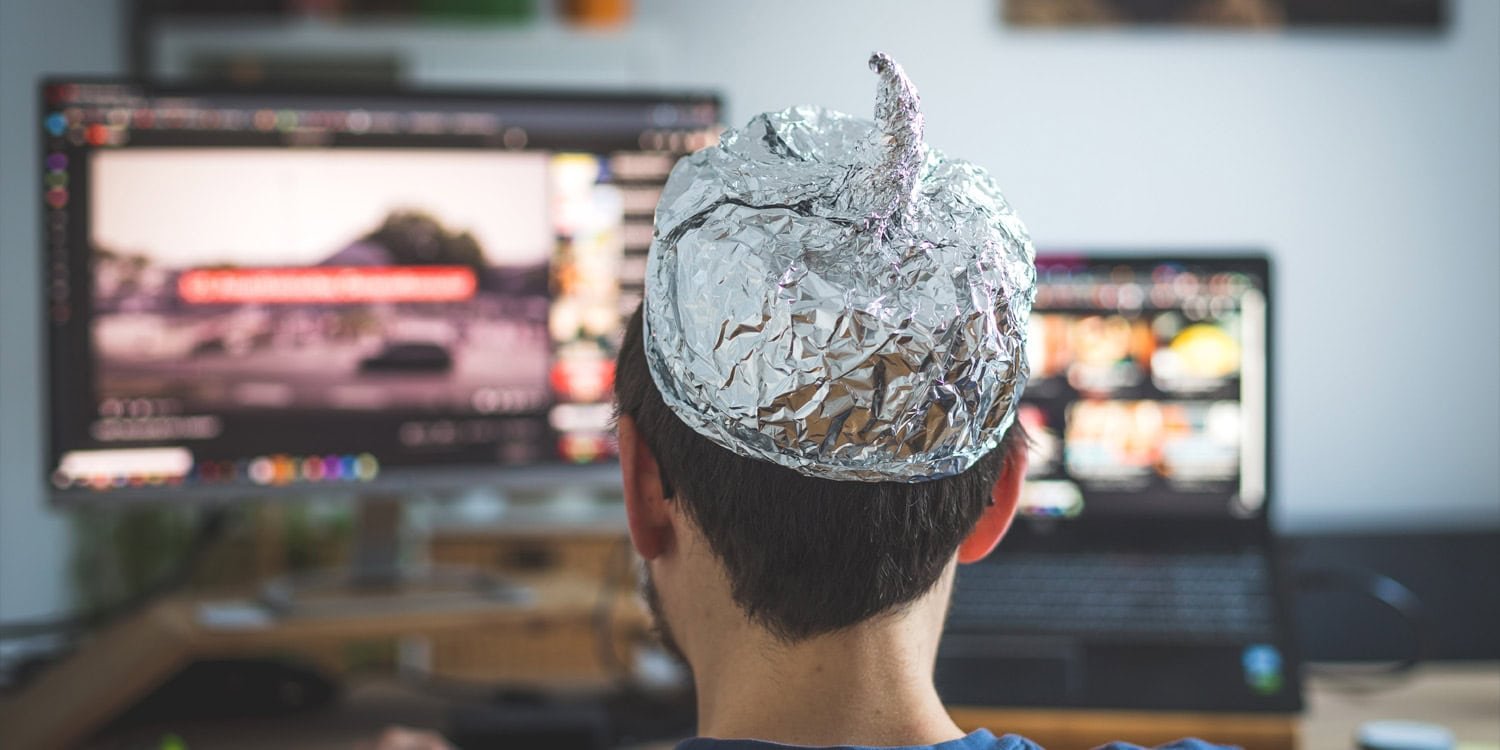
Recent research published in political psychology A person’s general tendency to believe in conspiracies suggests that he or she is strongly predicted to support a particular political rumor, primarily when that rumor attacks a political opponent. This study provides evidence that psychological traits and political allegiances interact to shape what people are willing to believe. These findings help explain how political divisions influence the spread of misinformation.
Previous research has identified two distinct predictors of these beliefs. First, people have varying levels of “conspiracy thinking.” This is a common psychological tendency to believe that secret evil forces control world events.
Second, people tend to support their own political groups. They typically accept theories that blame their political opponents and reject theories that blame their own side. The researchers designed this study to see if these two separate factors actually interact.
The scientists wondered if the impact of popular conspiracy theories might be stronger when the rumors matched a person’s political biases. People naturally want to protect their group’s reputation, and at the same time assume the worst about others. Because of this natural bias, the researchers predicted that people who are more prone to conspiratorial thinking would be more willing to accept rumors about rivals.
“I am a political scientist interested in conspiracy theories, primarily partisan conspiracy theories involving political parties/politicians/ideological groups,” said study author Omar Yair, a research fellow at Reichmann University’s Lauder School of Government, Foreign Affairs and Strategy’s Institute for Freedom and Responsibility.
“And over the past few years, I’ve read a number of articles showing that both political preferences, such as party identification, and ‘conspiracy thinking’ (also known as conspiracy theory), the tendency of people to believe in conspiracy theories, independently explain belief in partisan conspiracy theories.
“I suspected that a combination, or interaction, of these two important predictors of belief in conspiracy theories might help better explain who the people are most likely to believe in these partisan conspiracy theories. After a quick search of the literature, I found no empirical support for such an interaction. So I collected data from several studies and found consistent support for the interaction hypothesis.”
To investigate this, scientists analyzed survey data from six different studies. Two of these studies were conducted in the United States and four in Israel. In total, a total of 10,765 adult participants were included in the sample.
The survey asked participants about 61 different conspiracy theories. Thirty of these theories were political in nature, accusing secret conspiracies of particular politicians or political parties. The remaining 31 theories were non-political, such as hidden information about aliens or rumors about secret cures for diseases.
The first U.S. study surveyed 2,021 adults and was conducted in spring 2021. The survey asked participants about 12 political theories and 27 non-political theories. The sample was designed to be representative of the American adult population in terms of age, gender, race, and income.
The political content included rumors that Republicans stole the last presidential election and that Barack Obama lied about his nationality to become president. Nonpolitical items included ideas that were not targeted at a particular political party. These included rumors that the economy was controlled by an elite 1 percent and that the dangers of genetically modified foods were being kept secret from the public.
The second U.S. study surveyed 2,765 adults and was conducted in July 2024. This investigation specifically focused on two political theories regarding the recent assassination attempt on presidential candidate Donald Trump.
In Israel, four initial studies were conducted from February 2023 to April 2025 with a total of 5,979 adults. These surveys asked participants about 16 political theories and four non-political theories.
Israel’s theory focused on the political conflict between supporters of Prime Minister Benjamin Netanyahu and supporters of opposing political groups. For example, one theory suggests that security officials deliberately withheld information about the October 7 Hamas attack from the prime minister.
In all six studies, the scientists measured participants’ general conspiracy thinking using a standard four-question scale. Participants rated their agreement with statements suggesting that unknown persons secretly control the country or that significant events are the result of a hidden conspiracy.
The researchers also measured how strongly participants believed in particular theories. They pooled the responses to test for statistical relationships between a person’s general conspiratorial thinking, political identity, and belief in specific rumors.
The researchers found that general conspiracy theories strongly predicted belief in political conspiracy theories, but that this relationship was highly dependent on political alignment. When a theory accuses an individual’s political opponents of wrongdoing, the latent tendency to believe in conspiracies is strongly activated. In this situation, people with strong conspiracy theories are much more likely to believe the rumor.
Conspiracy theories were much less effective when theories accused individual political groups of secret conspiracies. Even people who are more likely to believe in hidden conspiracies are much less likely to believe a rumor if it casts blame on their side.
The researchers noted that the strongest interactions occurred during the 2024 US election, when political tensions were particularly high.
“Our results point to an interesting combination or amalgamation of psychological predispositions and political preferences. So that’s not the case.” just people’s politics just It’s a combination of people’s psychological tendencies that influence support for partisan conspiracy theories,” Yair told SciPost.
“I think the most extreme example in our data concerns belief in the conspiracy theory that Democratic operatives were behind the July 2024 assassination attempt on Donald Trump in Pennsylvania. Our analysis shows that less than 10 percent of Republicans with the lowest level of conspiracy theory in our data supported this conspiracy theory, while nearly 80 percent of Republicans with the highest level of conspiracy theory supported this conspiracy theory.”
The scientists also found that this interaction only applied to political rumors. When looking at non-political theories, such as hidden information about unidentified flying objects and genetically modified foods, political affiliation did not change the impact of conspiracy theories. Highly conspiratorial Republicans and highly conspiratorial Democrats were equally likely to believe these neutral rumors.
The data also reveals geographic differences between the two countries. “We were getting data from both the United States and Israel, and we were a little surprised to see specific differences between the two countries,” Yair said. “We found that conspiracy theories in Israel are more ‘politicized’ in the sense that the influence of conspiracy theories on conspiracy theories is consistently stronger in the United States, whereas fundamental partisan differences (i.e., differences between parties and rival groups with the lowest levels of conspiracy theory) are consistently stronger in Israel. As an Israeli, this was very surprising.”
“I think there are two main points. First, even people who are ‘conspiracy theorists’ and tend to believe in many conspiracy theories are unlikely to respond in the same way to conspiracy theories that blame political opponents and conspiracy theories that blame their own political group. In fact, they are more likely to believe conspiracy theories that blame the opposition than conspiracy theories that blame political in-groups.”
“Second, not all members of a partisan/ideological group believe in conspiracy theories that indict political opponents,” Yair explained. “Rather, members of groups that are ‘conspiratorial’ and tend to believe in such conspiracy theories are most likely to believe such conspiracy theories, while members of other groups are less likely or much less so.”
Although the study provides evidence of this psychological and political interaction, the scientists noted some limitations. Because the data comes from only two countries, these patterns may look different in other parts of the world.
Additionally, the observational nature of the study does not allow researchers to completely rule out reverse causation. It’s possible that believing certain rumors can increase a person’s overall conspiracy thinking, but researchers believe this is unlikely.
The boundaries between political and non-political theory can sometimes become blurred. Rumors that seem completely unrelated to politics today may be deeply tied to a particular political party tomorrow, making it difficult to completely categorize these beliefs.
Yair said future research could test these ideas in other social contexts, such as group conflicts based on race, gender, or nationality. Experimental studies that change the way rumors are told could also help support these findings.
The study, “Belief in conspiracy theories and partisan conspiracies: A moderating effect of partisan congruence?” was authored by Omer Yair, Sheila Hebel Serra, Amnon Cavalli, and Asif Efrat.
