


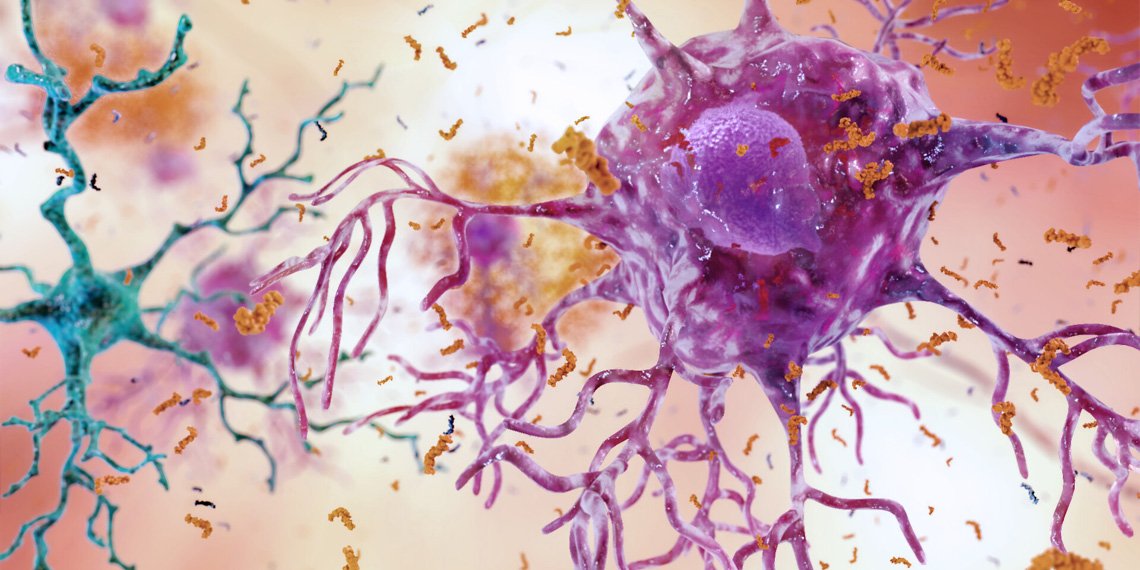
A recent study found that the physical movement difficulties often associated with Alzheimer’s disease may originate from outside the brain. By creating microscopic models of human nerves and muscles, researchers demonstrated that these movement disorders occur independent of cognitive decline, suggesting new targets for medicine. The study was published in the journal Alzheimer’s disease and dementia.
Alzheimer’s disease is usually associated with memory loss and severe cognitive decline. Doctors regularly observe that patients experience motor problems, such as slowed walking speed, decreased grip strength, and decreased sense of balance, long before psychiatric symptoms appear.
Historically, medical research has treated these physical symptoms as secondary effects that result directly from brain degeneration. It remained unproven whether the disease also independently attacks the body’s peripheral nerves, which make up the vast network that connects the spinal cord with the rest of the body.
To investigate the root of these movement problems, researchers took a closer look at the neuromuscular junction. This is the exact biological point where nerve cells send chemical signals to muscle cells, telling them to contract and produce physical movement.
The study was led by Professor James Hickman and Xiufang Guo of the University of Central Florida, with Akhmetsada Kargazanov serving as first author. The academic team worked with scientists from Hesperus, a biotech company co-founded by Hickman, to build a specialized laboratory model.
The researchers focused on familial Alzheimer’s disease. This is a rare genetic version of this condition that usually appears when the patient is between 40 and 65 years of age. This differs from the more common sporadic disease, which generally affects older people and has no single genetic cause.
To perform the experiment without using live human subjects, the researchers used human induced pluripotent stem cells. These are adult cells, usually taken from the skin or blood, that have been chemically reprogrammed to function like embryonic stem cells. This reprogramming allows scientists to guide cells to develop into almost any type of tissue in the human body.
Scientists used this cell technology to grow motor neurons in humans. Motor neurons are specialized nerve cells responsible for controlling our voluntary movements. They genetically modified these nerves to carry one of two specific gene mutations associated with familial Alzheimer’s disease.
The researchers then combined these mutated nerve cells with healthy human muscle cells in a microscopic experiment known as a human-on-a-chip. This compact system is divided into two separate chambers, effectively mimicking a functional neuromuscular junction while completely removing the brain and spinal cord from the equation.
By removing the central nervous system from the model, the researchers were able to pinpoint the exact cause of the physical failure. If the motor system no longer functions properly in this isolated environment, the disease proves itself to be attacking the peripheral nerves.
Testing drugs in animal models such as mice can be problematic because human and animal biology differ in how they influence the progression of symptoms. Microscopic human cell models circumvent this biological gap and allow researchers to collect data that more accurately reflects the human body.
During the main experiment, the researchers applied an electrical current through the nerve cavity to stimulate the cells, prompting them to send motor signals to the connected muscle cavity. They used high-speed cameras and computer software to track how well the muscles responded to these commands.
The researchers measured several specific parameters to measure the health of the cells. They focused on fidelity, which measures how reliably muscles actually contract when nerves send signals. They also tested the fatigue index and recorded how long the muscles could maintain tight contractions under rapid electrical stimulation.
The results showed that nerve cells with the Alzheimer’s disease mutation have a hard time communicating with healthy muscle cells. Neurons with a genetic mutation known as PSEN1 showed severe defects across all testing days.
These particular cells were unable to reliably cause muscle contraction, leading to higher rates of muscle fatigue. The biological connections between nerves and muscles also became unstable over time compared to healthy control cells.
Neurons with another defect, called the APP mutation, showed moderate deficits. Although these performed better than PSEN1 cells, they still showed a decline in their ability to induce robust muscle contractions midway through the test period.
The breakdown in communication was clearly caused by diseased motor neurons, as the muscle cells used in the experiment were completely healthy. The research team was able to demonstrate that peripheral nerve damage occurs independently of brain degeneration.
The researchers also observed microstructures called endosomes, which function like small transport pods or recycling centers inside cells. Scientists noticed that the transport pods of mutated nerve cells were abnormally enlarged. These pods help recycle the chemicals needed to send motor signals, so their dysfunction provides biological clues as to why neurotransmission fails.
The researchers also wanted to see if common Alzheimer’s drugs could address this peripheral nerve dysfunction. They treated the diseased cells with memantine and galantamine, two drugs that are routinely prescribed to help manage cognitive symptoms in the early stages of the disease.
Memantine works by blocking certain chemical receptors to prevent nerve cell damage, and galantamine stops the breakdown of chemical messengers, prolonging the effect. Adding these drugs to the microscopic model did not result in statistically significant improvements in nerve-muscle connection function.
These drugs were unable to restore reliable communication between nerves and muscles. This lack of recovery suggests that treatments aimed only at healing the brain do not automatically repair damage in other parts of the body.
Mr. Hickman pointed out the importance of this specific recognition. “This is the first time we’ve shown that peripheral nervous system disorders can result directly from these mutations,” Hickman says. “This means that drugs that target the brain may not solve problems in other parts of the body.”
Although this model provided clear insights, this study has some clear limitations. The microscope system used in the experiment contained only motor neurons and skeletal muscle cells, making it a very basic representation of human biology.
In the living human body, other cell types such as protective astrocytes and Schwann cells interact with nerves and muscles to support daily functions. Introducing these supporting cells into a laboratory model could alter the outcome, worsening symptoms or compensating for diseased nerves.
Future studies may extend this model by testing not only nerve cells, but also muscle cells that carry Alzheimer’s mutations. Researchers can also use the small device to model sensory neurons, which could help them understand how the disease affects the body’s sense of touch and pain.
In this study, current drugs failed to heal the peripheral nerves, so the miniature human-on-a-chip could serve as a testing ground for new medicines. Developing combination therapies that target both cognitive and physical decline may ultimately improve patients’ overall quality of life.
The study, “Assessing peripheral nervous system pathology in Alzheimer’s disease using a functional human NMJ microphysiological system,” was authored by Akhmetzada Kargazhanov, Romy Aiken, Kenneth Hawkins, Rafael Lopez, Ahmad Nawaz, Gaurav Srivastava, Chase Miller, Will Bogen, Christopher Long, David Morgan, Xiufang Guo, and James Hickman.
