


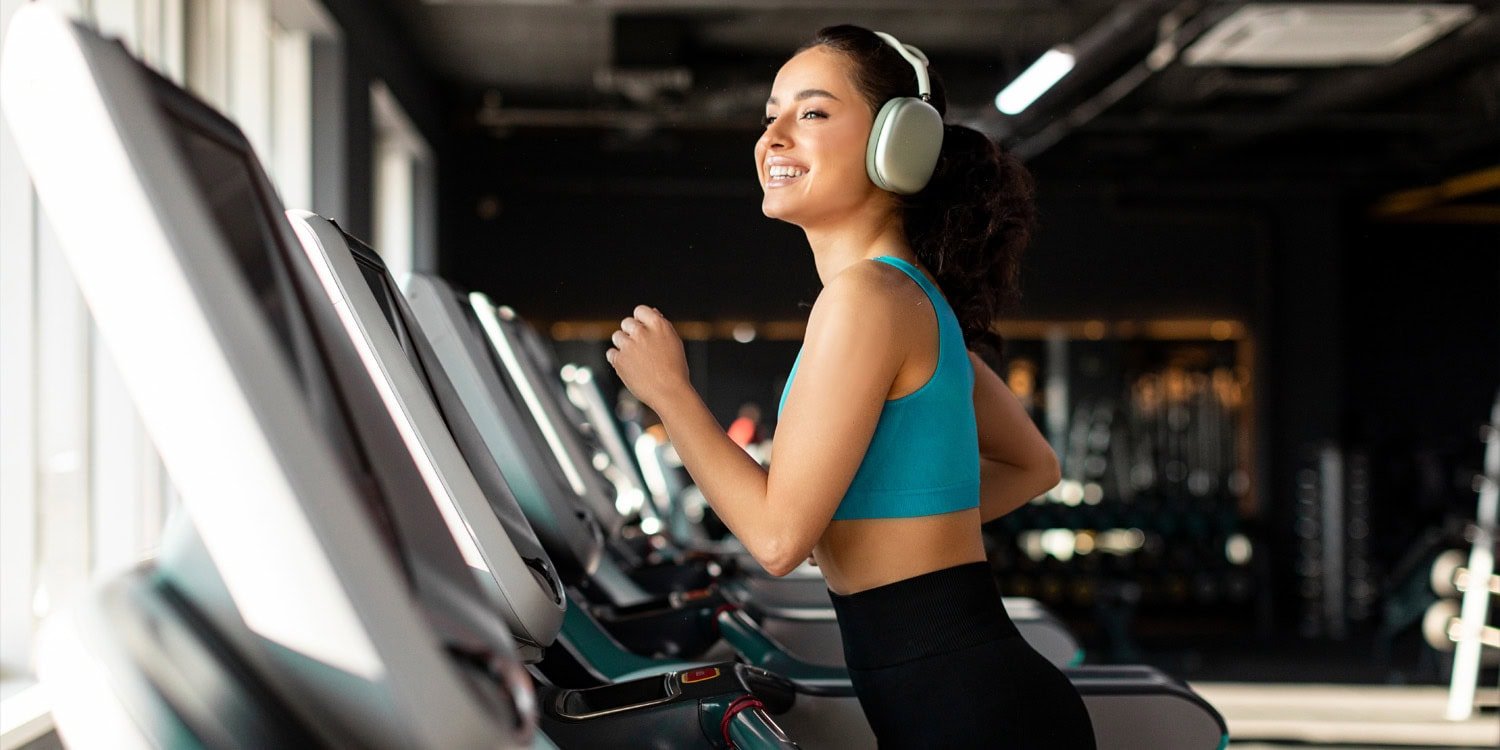
A study in Brazil found that people with good cardiorespiratory fitness tended to have lower levels of trait anxiety. They also tended to be more resilient in situations of emotional stress. The paper was published in Acta Psychologica.
Cardiorespiratory fitness is the ability of the heart, blood vessels, lungs, and muscles to efficiently supply and use oxygen during sustained physical activity. This reflects how well your body can perform activities such as walking, running, cycling, and swimming for long periods of time without becoming unduly fatigued. People with good cardiorespiratory fitness can usually exercise for longer periods of time and recover faster after exercise. This form of fitness is important because it is closely associated with physical health, endurance, and reduced risk of cardiovascular disease.
One important indicator of cardiovascular fitness is maximum oxygen uptake, called VO2max, which estimates the body’s ability to use oxygen during intense exercise. Resting heart rate is another indicator, as a lower resting heart rate is associated with better cardiovascular efficiency. Heart rate recovery after exercise is also helpful, since faster recovery generally suggests better fitness. Endurance performance in activities such as timed walking, running, and cycling tests can also indicate cardiovascular health. Additional indicators include blood pressure response to exercise and how easily a person can sustain moderate or vigorous activity.
Study author Thales Ghilarducci Costa and his colleagues investigated how cardiovascular fitness is associated with changes in anxiety and anger in response to emotionally evocative visual stimuli. They point out that modern lifestyles are associated with exposure to emotional stress from a variety of sources, and that stressful life events can reduce physical activity habits and, therefore, poor cardiorespiratory fitness.
These authors hypothesized that participants with high cardiorespiratory fitness would be more resistant to changes in anger and anxiety induced by emotional imagery stimuli compared to those with low cardiorespiratory fitness. They also predicted that higher cardiorespiratory fitness would be associated with lower trait anger and trait anxiety (i.e., a tendency toward anger and anxiety as general or enduring traits).
Study participants were 40 healthy people recruited by the study authors through personal invitations and advertisements on social media. Of these, 23 were women and their ages ranged from 18 to 40.
Participants visited the laboratory twice, 24 to 72 hours apart. During the first visit, participants completed weight and height measurements and baseline assessments of trait anger and trait anxiety. They also self-reported their physical activity levels, which the study authors used to mathematically estimate their cardiovascular fitness. Based on this, participants were categorized into groups with above-average or below-average cardiorespiratory fitness.
Across two visits, participants viewed a series of photographs from the International Affective Picture System, a validated database of emotionally graded images known to arouse specific emotions. Participants viewed a set of 69 unpleasant images in one visit and a set of 69 neutral images in the other visit. The order of the photo sequences was randomly assigned, and each viewing session lasted 30 minutes.
During the slideshow, participants reported their emotional reactions to each image using a nonverbal rating scale called a self-rating mannequin. They also completed ratings of state anxiety and state anger (i.e., how angry and anxious they felt in that moment) immediately before and after viewing each photo set. Additionally, the study authors monitored participants’ heart rates while they viewed the photos.
They found that while the two fitness groups did not differ in baseline anger, anxiety, or heart rate immediately before the viewing session, they did differ in general characteristics. Specifically, higher estimated maximum oxygen uptake (VO2max) was significantly associated with lower trait anxiety. However, the researchers found that, contrary to their hypothesis, cardiorespiratory fitness was not associated with angry traits.
Additionally, stressful stimuli had a greater effect on the less fit group. After viewing an unpleasant photo, participants with below-average cardiorespiratory fitness reported significantly larger spikes in state anger and state anxiety compared to participants with above-average fitness. People with below-average fitness were 775% more likely to have their state anxiety levels rise from “moderate” to “high” after viewing stressful images.
“Our findings show that people with higher CRF (cardiorespiratory fitness) tend to have lower trait anxiety and greater resilience when exposed to emotionally stressful stimuli, supporting the growing evidence that physical activity plays an important role in mental health,” the study authors concluded.
This study contributes to the scientific understanding of the psychological correlates of cardiorespiratory fitness. However, it should be noted that this study was conducted on a very small group of participants and all information regarding cardiorespiratory fitness was estimated based solely on self-reported physical activity rather than direct clinical testing. Results from studies of larger groups using more objective measures of cardiorespiratory fitness may differ.
The paper, “Cardiorespiratory fitness is associated with reduced anger and anxiety and increased emotional resilience,” was published by Thales Ghilarducci Costa, Lucas Carrara de Amaral, Naian Silva Morais, and Wellington Fernando. Written by Do da Silva, Douglas Assis Telles Santos, Rodrigo Luis Vancini, Carlos Alexandre Vieira, Mario Hebring Campos, Marilia Santos Andrade, and Vito. Knechtl, Katja Weiss, Ricardo Borges Viana, and Claudio Andre Barbosa de Lira.
