

Close Menu

    Subscribe to Updates

    Get the latest creative news from FooBar about art, design and business.

    What's Hot

    Study finds two simple eating habits linked to weight loss

    April 11, 2026

    Early weight gain is associated with lifelong health consequences

    April 11, 2026

    Scientists discover interesting brainwave patterns associated with rhythmic sound meditation

    April 11, 2026
    Facebook X (Twitter) Instagram
    Facebook X (Twitter) Instagram
    Health Magazine
    • Home
    • Environmental Health
    • Health Technology
    • Medical Research
    • Mental Health
    • Nutrition Science
    • Pharma
    • Public Health
    • Discover
      • Daily Health Tips
      • Financial Health & Stability
      • Holistic Health & Wellness
      • Mental Health
      • Nutrition & Dietary Trends
      • Professional & Personal Growth
    • Our Mission
    Health Magazine
    Home » News » A 67-year-old “crazy” theory about vitamin B1 has finally been proven
    Nutrition Science

    A 67-year-old “crazy” theory about vitamin B1 has finally been proven

    healthadminBy healthadminApril 11, 2026No Comments4 Mins Read
    A 67-year-old “crazy” theory about vitamin B1 has finally been proven
    Share
    Facebook Twitter Reddit Telegram Pinterest Email


    Chemists have achieved what many once thought impossible by stabilizing a highly reactive molecule in water, confirming a 67-year-old theory about vitamin B1. This breakthrough not only solves a long-standing biochemical mystery, but also points toward cleaner and more efficient ways to make medicines.

    The discovery centers on carbenes, a type of carbon with only six valence electrons. Under normal conditions, carbon atoms are most stable when they have eight electrons. With only six carbenes, it is highly unstable and reacts almost instantly with its surroundings. It usually breaks down quickly in water.

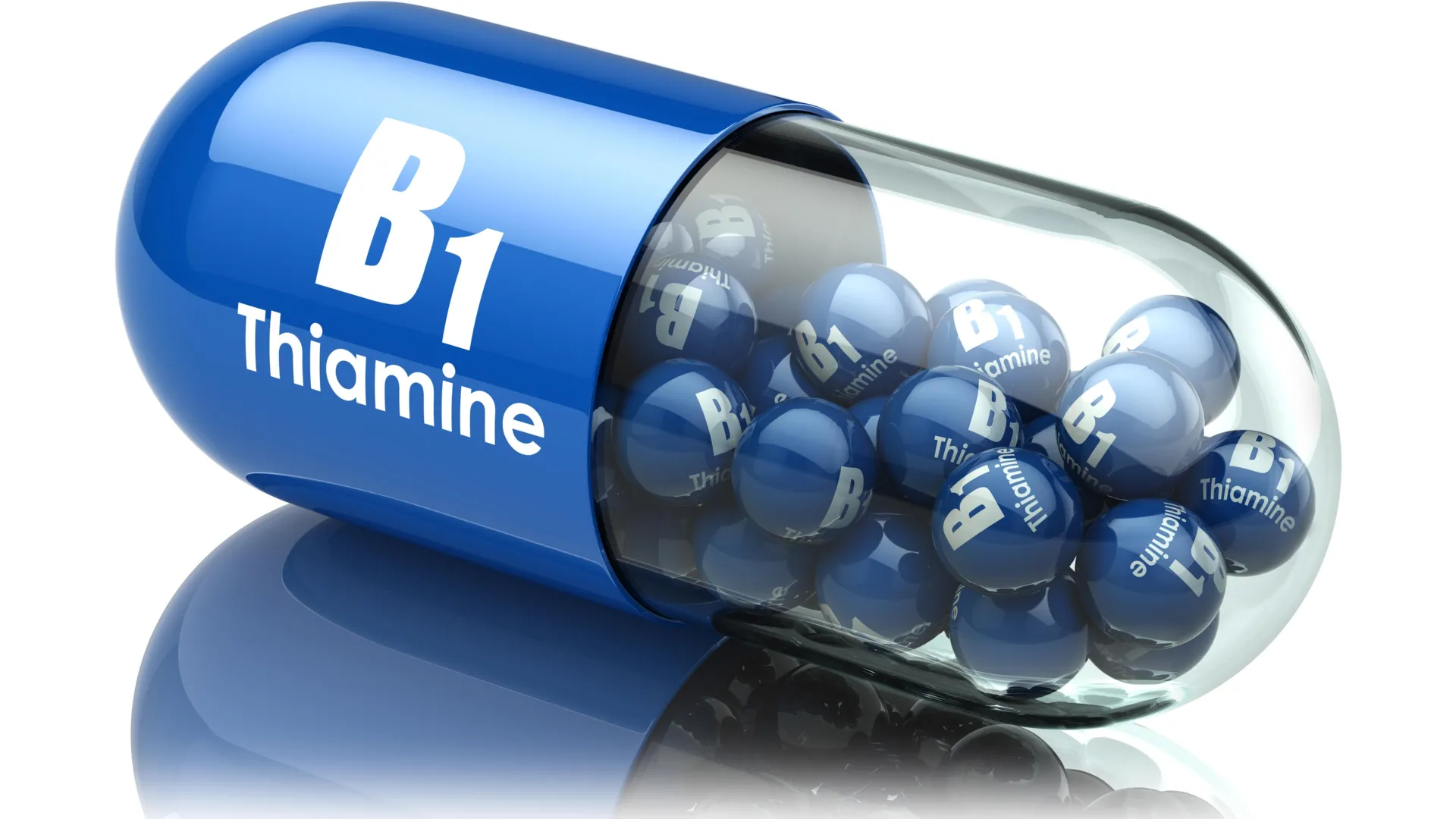
    For decades, scientists have suspected that vitamin B1, also known as thiamine, temporarily forms carbene-like structures within cells that help facilitate essential biochemical reactions. But this molecule is so unstable that no one has been able to observe it directly under such conditions.

    Stable carbene observed for the first time in water

    Researchers have now succeeded in producing carbenes that are stable in water. They not only produced it, but separated it, sealed it in a tube, and observed that it remained intact for months. The findings are detailed in a study published in Science Advances.

    “This is the first time we’ve been able to observe stable carbenes in water,” said Vincent Lavallo, a professor of chemistry at the University of California, Riverside, and corresponding author of the paper. “People thought this was a crazy idea. But as it turned out, Breslow was right.”

    1958 hypothesis finally confirmed

    Ravallo is referring to Columbia University chemist Ronald Breslow, who in 1958 proposed that vitamin B1 could be converted to carbenes, enabling important biochemical reactions. Although the idea was influential, it remained unproven because carbenes were known to be too unstable, especially in water, to be captured or studied.

    To overcome this challenge, Lavallo’s team developed a protective molecular structure surrounding the carbene. He describes it as “like an armor,” designed to protect the reaction center from water and other nearby molecules. This protection makes the carbene stable enough for detailed analysis using nuclear magnetic resonance spectroscopy and X-ray crystallography, providing clear evidence that such molecules can exist in water.

    “We were creating these reactive molecules not to follow historical theory, but to explore their chemistry,” said lead author Varun Raviprole. He completed his research as a graduate student at UCR and is currently a postdoctoral fellow at UCLA. “But our study turned out to confirm exactly what Breslow had proposed many years ago.”

    Aiming for more environmentally friendly chemistry and pharmaceutical production

    Its meaning is more than solving a scientific puzzle. Carbenes are widely used as “ligands,” or supporting components of metal-based catalysts that help accelerate chemical reactions. These catalysts play an important role in the production of pharmaceuticals, fuels, and other materials. However, many of these processes rely on toxic organic solvents.

    By stabilizing carbenes in water, researchers may have opened the door to safer and more environmentally friendly chemical production.

    “Water is an ideal solvent: it’s abundant, non-toxic and environmentally friendly,” Raviprole said. “Being able to make these powerful catalysts work in water would be a big step toward greener chemistry.”

    Getting closer to mimicking the chemistry of living cells

    The ability to create and maintain reactive intermediate molecules in water also brings scientists closer to replicating the chemical reactions that naturally occur inside living cells, which are made up mostly of water.

    “There are other reactive intermediates that we haven’t been able to separate so far,” Ravallo said. “With a defensive strategy like ours, we might finally be able to watch them and learn from them.”

    Milestones over the years

    For Ravallo, who has spent 20 years researching carbene, this result has both scientific and personal significance.

    “Just 30 years ago, people thought you couldn’t even make these molecules,” he says. “Now you can soak it and bottle it. What Breslow said all those years ago, he was right.”

    Raviprole sees this milestone as a broader lesson about tenacity in science.

    “If we continue to invest in science, what seems impossible today may be possible tomorrow,” he said.


    Source link

    Visited 1 times, 1 visit(s) today
    Share. Facebook Twitter Pinterest LinkedIn Telegram Reddit Email
    Previous ArticleYour nose may be able to detect Alzheimer’s disease years before symptoms start
    Next Article Scientists discover interesting brainwave patterns associated with rhythmic sound meditation
    healthadmin

    Related Posts

    Study finds two simple eating habits linked to weight loss

    April 11, 2026

    Early weight gain is associated with lifelong health consequences

    April 11, 2026

    Your nose may be able to detect Alzheimer’s disease years before symptoms start

    April 11, 2026

    Unusual airborne toxin detected for the first time in the US

    April 11, 2026

    Scientists finally solve the mystery of rare coronavirus vaccine blood clots

    April 11, 2026

    Even if this superconductor dies, it will come back to life again.

    April 10, 2026
    Add A Comment
    Leave A Reply Cancel Reply

    Categories

    • Daily Health Tips
    • Discover
    • Environmental Health
    • Exercise & Fitness
    • Featured
    • Featured Videos
    • Financial Health & Stability
    • Fitness
    • Fitness Updates
    • Health
    • Health Technology
    • Healthy Aging
    • Healthy Living
    • Holistic Healing
    • Holistic Health & Wellness
    • Medical Research
    • Medical Research & Insights
    • Mental Health
    • Mental Wellness
    • Natural Remedies
    • New Workouts
    • Nutrition
    • Nutrition & Dietary Trends
    • Nutrition & Superfoods
    • Nutrition Science
    • Pharma
    • Preventive Healthcare
    • Professional & Personal Growth
    • Public Health
    • Public Health & Awareness
    • Selected
    • Sleep & Recovery
    • Top Programs
    • Weight Management
    • Workouts
    Popular Posts
    • the-pros-and-cons-of-paleo-dietsThe Pros and Cons of Paleo Diets: What Science Really Says April 16, 2025
    • Improve Mental Health10 Science-Backed Practices to Improve Mental Health… March 11, 2025
    • How Healthy Living Is Transforming Modern Wellness TrendsHow Healthy Living Is Transforming Modern Wellness… December 3, 2025
    • Kankakee_expansion.jpgCSL releases details of $1.5 billion U.S.… March 10, 2026
    • urlhttps3A2F2Fcalifornia-times-brightspot.s3.amazonaws.com2Fc32Fcd2F988500d440f2a55515940909.jpegA ‘reckless’ scrapyard with a history of… October 24, 2025
    • Healthy Living: Expert Tips to Improve Your Health in 2026Healthy Living: Expert Tips to Improve Your Health in 2026 November 16, 2025

    Demo
    Stay In Touch
    • Facebook
    • Twitter
    • Pinterest
    • Instagram
    • YouTube
    • Vimeo
    Don't Miss

    Study finds two simple eating habits linked to weight loss

    By healthadminApril 11, 2026

    Maintaining a healthy weight isn’t just about food choices, it’s also about meal timing. Research…

    Early weight gain is associated with lifelong health consequences

    April 11, 2026

    Scientists discover interesting brainwave patterns associated with rhythmic sound meditation

    April 11, 2026

    A 67-year-old “crazy” theory about vitamin B1 has finally been proven

    April 11, 2026

    Subscribe to Updates

    Get the latest creative news from SmartMag about art & design.

    HealthxMagazine
    HealthxMagazine

    At HealthX Magazine, we are dedicated to empowering entrepreneurs, doctors, chiropractors, healthcare professionals, personal trainers, executives, thought leaders, and anyone striving for optimal health.

    Our Picks

    A 67-year-old “crazy” theory about vitamin B1 has finally been proven

    April 11, 2026

    Your nose may be able to detect Alzheimer’s disease years before symptoms start

    April 11, 2026

    Study finds that playing drums with friends increases oxytocin levels in children

    April 11, 2026
    New Comments
      Facebook X (Twitter) Instagram Pinterest
      • Home
      • Privacy Policy
      • Our Mission
      © 2026 ThemeSphere. Designed by ThemeSphere.

      Type above and press Enter to search. Press Esc to cancel.