


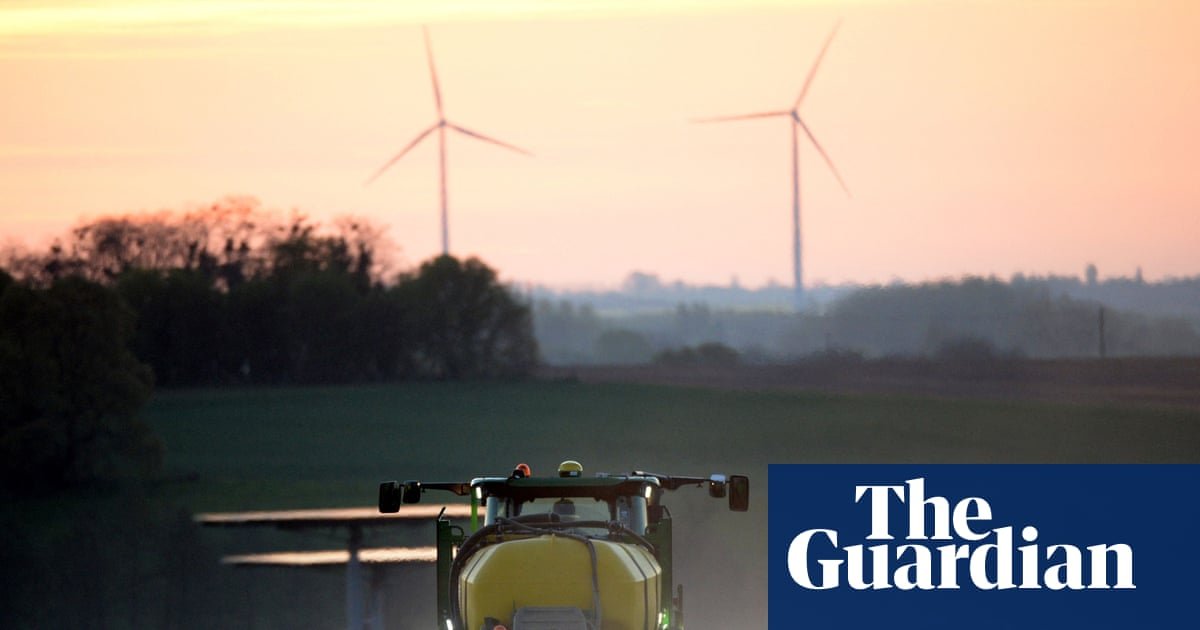
Scottish farmers in the 1980s pioneered the practice of spraying wheat with glyphosate just before harvest. Struggling to dry crops evenly in the humid valleys, they came up with the idea of speeding up the process by killing the crops a week or two before harvest.
Glyphosate, a revolutionary herbicide at the time that killed everything of plant origin and saved animal life, seemed perfect for the job. Soon, this practice spread to wet and cold agricultural regions around the world.
Four decades later, thousands of tonnes of glyphosate are now being sprayed every year on UK farmland, as well as council green spaces and home gardens. But the herbicide’s safety record is deeply questionable, leading to calls for it to be banned or severely restricted before its license is renewed in December.
More than 2,200 tonnes of glyphosate will be sprayed by farmers in 2024, more than half of it on wheat and other grains, an analysis of government data found.
The figures show that use of the chemical has increased tenfold over the past 30 years, and remains high even after the World Health Organization classified it as “probably carcinogenic” in 2015. Bayer claims its herbicides do not cause cancer.
“Glyphosate poisoning in the UK is spiraling out of control,” said Nick Moll, from the campaign group Pesticide Action Network UK, which carried out the analysis. “We know that glyphosate is linked to a variety of cancers and other life-threatening diseases. We also know that glyphosate damages the environment, pollutes water, and harms wildlife.
“Governments need to urgently commit to phasing out and eventually banning glyphosate, and support farmers and local authorities to adopt safe and sustainable alternatives.”
Glyphosate is a full-spectrum herbicide that kills all weeds, including both grass and broadleaf species. This makes it a powerful tool for farmers. However, genetically modified crops that are resistant to the effects of glyphosate are used in the UK in a very different way than in the US, where they are heavily sprayed with glyphosate while growing.
“The main use of glyphosate in the UK is to apply it before planting crops to kill any weeds growing in the field,” says Helen Metcalf, an agroecologist at Rothamsted Research Institute in Harpenden, Hertfordshire.
Metcalfe said the shift to less destructive “regenerative” agriculture is the main reason for the increased use of glyphosate. An alternative method is to till the field and eradicate the weeds. But it also damages the soil, which “farmers are trying to protect,” she says. “They’re trying to protect the soil, they’re trying to prevent erosion, they’re trying to store carbon in the soil, they’re trying to do all the other good things. For regenerative agriculture to work, they need to apply glyphosate.”
However, the introduction of synthetic chemicals comes with risks. In the US, Bayer offered $7.25 billion (£5.4 billion) to settle thousands of lawsuits alleging it failed to warn people that Roundup, which contains glyphosate, could cause cancer. In France, the government recognized the link between Parkinson’s disease and glyphosate and compensated farmers.
Associate Professor Wayne Carter, who studies the biological effects of pesticides at the University of Nottingham, said: “As with most things, basically the higher the exposure, the higher the concern.” “If you have too much, it’s potentially toxic, so you can be exposed through your diet, you can be exposed through the inhalation route. You also have to be careful about basically going out and spreading it in your garden.”
In 2023, the EU banned the use of glyphosate in pre-harvest drying processes, reflecting concerns about glyphosate accumulation in food.
A UK government spokesperson insisted that the use of glyphosate is subject to strict regulations, adding: “Pesticides are only approved for use when evidence shows they do not pose a risk to human or animal health and do not have an unacceptable impact on the environment.”
