


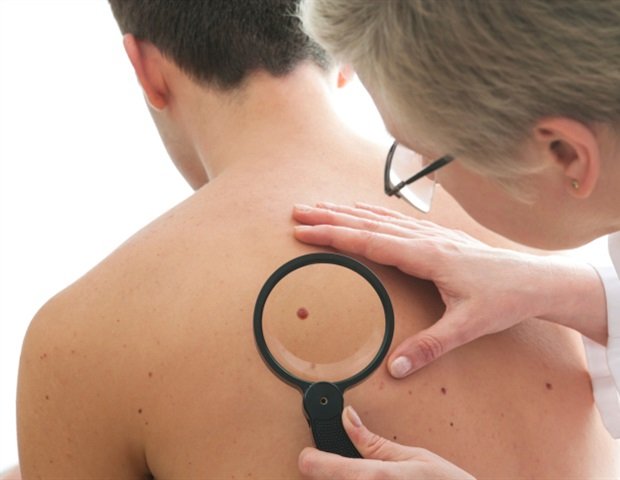
Melanoma is a deadly skin cancer that is usually removed surgically. Currently, researchers are ACS Nano They report that they have developed a non-invasive treatment for melanoma in the form of a stretchable, heat-activated patch that resembles a bandage. When the patch is activated, copper ions are released, killing the underlying cancer cells and preventing them from spreading. Researchers say that in tests on mice, the patch reduced melanoma lesions without damaging surrounding tissue.
Melanoma usually forms in the outermost and middle layers of the skin. This makes it difficult to kill cancer cells while leaving surrounding healthy tissue intact. Recent advances in nanotechnology may lead to gentler, more targeted skin cancer treatment options. One example is laser-induced graphene (a laser-etched porous carbon material). Researchers Xin Li, Shi Chen, Meijia Gu, and Ruquan Ye used this material to create a skin patch for targeted melanoma treatment by filling the pores with copper(II) oxide and embedding it in a stretchable silicone polymer.
The patch itself is soft, stretchy, breathable to the skin, and chemically inert. However, the researchers hypothesized that by gently heating the patch, it releases copper ions that interact with the DNA of cancer cells and kill them through oxidative stress. This pathway should also trigger an immune response that inhibits the migration (metastasis) of tumor cells to other parts of the body.
To test this concept, the researchers placed the patch on top of melanoma cells grown in the lab. They used a low-power laser to warm the patch to 108 degrees Fahrenheit (42 degrees Celsius). In its activated state, the patch released copper ions into the melanoma cells directly beneath it. The research team found that copper ions killed most melanoma cells in culture and slowed their movement.
In a preliminary 10-day animal study, they applied the patch to mice with melanoma. On days 1 and 5, the patches were activated with a laser for 1 hour. This treatment reduced melanoma lesions by 97%. As expected, the tissue samples showed that cancer cells had not migrated beyond the tumor boundaries and that copper ions were not accumulating in organs or blood.
Combining these early findings with the patch’s reusability and ease of administration, the research team concluded that this technology could one day be used for targeted, safe and effective melanoma treatment in humans.
sauce:
american chemical society
Reference magazines:
DOI: 10.1021/acsnano.5c21102
