


Researchers at the Icahn School of Medicine at Mount Sinai have discovered a molecular switch in neurons that limits the regrowth of damaged axonal fibers. The survey results were published in a magazine nature (https://doi.org/10.1038/s41586-026-10295-z), show that blocking a protein called aryl hydrocarbon receptor (AHR) may promote nerve regeneration and functional recovery after peripheral nerve or spinal cord injury.
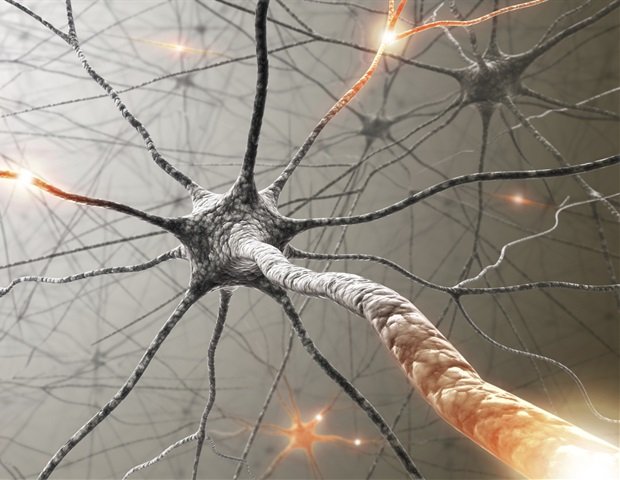
Axons are long fibers that carry signals between nerve cells or neurons in both the central and peripheral nervous systems. Axons are essential for communication in the nervous system. When fibers are severed or damaged, recovery depends on the neuron’s ability to regrow these fibers.
However, adult mammalian neurons have a limited ability to regrow axonal connections;
Nerve or spinal cord injuries often result in long-term or permanent loss of movement or sensation. Scientists have been working for years to understand why this repair process is so limited.
In the new study, researchers found that AHR acts as a key regulator that determines how neurons respond after injury.
When neurons are damaged, they must deal with stress while trying to regrow their axons. We found that AHR acts like a brake, shifting neurons toward managing stress rather than rebuilding damaged connections. ”
Hongyan Zou, MD, professor of neurosurgery and neuroscience at the Icahn School of Medicine at Mount Sinai, senior author of the study
The research team showed that when AHR signaling was activated, axon growth slowed. But when the researchers removed AHR from neurons or blocked it with drugs, axonal fibers regenerated more effectively. In mouse models of peripheral nerve injury and spinal cord injury, inhibiting AHR also improved recovery of motor and sensory function.
Further experiments revealed how this process works. After injury, AHR helps neurons protect themselves by maintaining protein quality control, a process known as proteostasis. This protective response helps neurons cope with stress, but it also reduces the production of new proteins needed for growth.
When AHR is turned off, neurons change strategy. They begin to produce more new proteins and activate growth-related pathways that support axon regeneration. The researchers also discovered that this growth response relies on another factor called HIF-1α, which helps regulate genes involved in metabolism and tissue repair.
“This finding shows that neurons utilize AHR to maintain a balance between survival and regeneration,” Dr. Zou explained. “By releasing this brake, we can push neurons into a state where they are more likely to repair.”
AHR was originally identified as a sensor for detecting environmental toxins and pollutants called xenobiotics. New findings suggest that AHR also plays an unexpected role inside neurons by integrating environmental sensing and the regenerative ability to regrow axons after injury.
This study is an early step toward a possible treatment. Some drugs that inhibit AHR are already being tested in clinical trials for other diseases, raising the possibility that they will eventually be studied for nerve or spinal cord injuries.
Further research is needed before this approach can be used in patients. Future studies will investigate how effective AHR inhibitors are on different types of nerve injury, determine the optimal timing and dosage of treatment, and evaluate the effects on other cells after injury.
The Mount Sinai research team plans to test AHR inhibitors and gene therapy strategies designed to reduce AHR activity in neurons. The goal of the next stage of research is to determine whether these approaches can further promote axonal regrowth and improve recovery after spinal cord injury, stroke, or other neurological diseases.
sauce:
Mount Sinai Health System
Reference magazines:
Halawani, D. and others. (2026). AhR inhibition promotes axon regeneration via a stress-growth switch. Nature. DOI: 10.1038/s41586-026-10295-z. https://www.nature.com/articles/s41586-026-10295-z
