


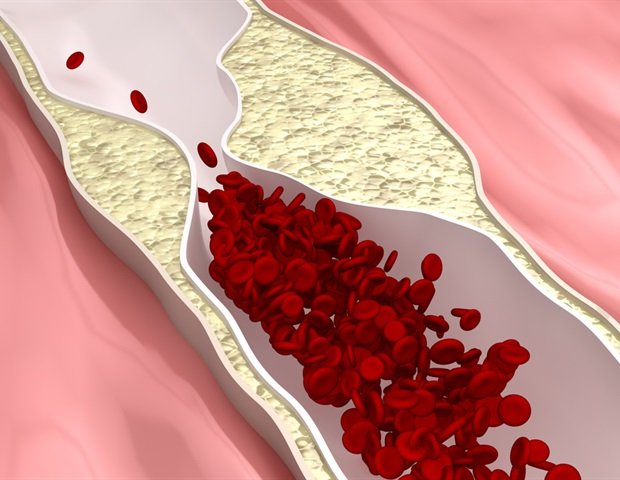
A one-year substudy presented at the American College of Cardiology’s Annual Scientific Meeting (ACC.26) found that despite significant reductions in triglycerides, patients with triglycerides above 150 mg/dL and at high risk for atherosclerosis did not see a significant change in the amount of noncalcified plaque in their coronary arteries after taking the triglyceride-lowering drug olearsen.
Triglycerides are fat particles in the blood. Elevated triglyceride levels (known as hypertriglyceridemia) are associated with increased cardiovascular risk, but so far treatments designed to lower triglycerides have not had a clear effect on reducing the risk of serious cardiac events. In contrast, treatments that reduce low-density lipoprotein cholesterol (LDL-C), another common marker of cardiovascular risk, have been clearly shown to slow or reverse plaque buildup in arteries, thereby helping to prevent heart attacks and strokes.
Results from the Essence-TIMI 73b study, published in 2025, found that olearsen significantly lowered triglycerides in patients with hypertriglyceridemia. This substudy of the trial included 468 participants who underwent coronary computed tomography angiography (CCTA), a noninvasive imaging test that measures plaque in coronary arteries, at baseline and 12 months after randomization. The results suggest that the changes in blood components seen in the Essence-TIMI 73b trial (a 60% reduction in triglycerides and a 15% reduction in apolipoprotein B) may not translate into immediate reductions in coronary artery plaque buildup, which causes atherosclerosis and causes events such as heart attacks and strokes.
Treatment with olearsen in addition to standard-of-care lipid-lowering therapy in patients with near-moderate hypertriglyceridemia significantly lowered triglycerides and residual cholesterol and slightly lowered ApoB, but had no effect on noncalcified coronary plaque burden after 12 months. ”
Nicholas Marston, MD, MPH, cardiologist and assistant professor at Brigham and Women’s Hospital in Boston and Harvard Medical School, and lead author of the study
Olezarsen is designed to reduce apolipoprotein C3, which plays a role in regulating triglyceride metabolism. This does not affect LDL-C, making it a useful test case to help researchers pinpoint the role of triglycerides in heart disease risk.
Before the study, all participants in the substudy had triglyceride levels ≥150 mg/dL, measurable plaque on baseline CCTA, and high risk or known presence of atherosclerosis. Median age was 63 years, 31% were female, and more than 50% had diabetes. At baseline, participants’ median triglyceride levels were 249 mg/dL (i.e., most participants had moderate but not severely elevated triglyceride levels), LDL-C was 81 mg/dL, and ApoB was 93 mg/dL.
Participants were randomly assigned to receive 50 mg or 80 mg of olearsen per day, or a placebo. Differences between groups assigned to receive olearsen were minimal, and patients who received either dose of olearsen were pooled together for the CCTA substudy.
The primary endpoint of the CCTA substudy was the percent change in volume of noncalcified plaques (the type that is softer, more friable, and more likely to cause occlusion) between baseline and 12-month CCTA scans. Already calcified or hardened plaques were not expected to be affected by triglyceride-lowering drugs, but the researchers hypothesized that lowering triglycerides may slow the progression of non-calcified plaques. However, the results revealed that there was no significant change in the amount of non-calcified plaque compared to placebo, and there were no differences in related secondary endpoints.
Although the study’s 12-month follow-up was relatively short, the researchers said this should be long enough to observe differences in plaque burden. The effect of Olezarsen on ApoB was also relatively mild. Marston said drugs that have a greater effect on both triglycerides and ApoB may have a measurable effect on plaque burden.
Previous studies suggest that triglyceride-rich particles carry at least as much cardiovascular risk as LDL particles. However, the researchers said further studies over longer periods of time are needed to fully understand this relationship.
“Ultimately, cardiovascular outcomes trials will be needed to determine the cardiovascular effects of long-term ApoC3 inhibition, tested as monotherapy or in combination with another lipid-lowering therapy,” Marston said.
The study was funded by Ionis Pharmaceuticals, the manufacturer of olearsen.
The study was published online at the same time. circulation At the time of the presentation.
Dr. Marston will present his study, “Effects of Intensive Triglyceride Lowering with Olesarsen on Coronary Atherosclerosis Progression: Coronary CTA Substudy of the Essence-TIMI 73b Randomized Trial,” on Monday, March 30th at 8:30 a.m. CT/13:30 p.m. UTC in the main tent of the Great Hall.
sauce:
American College of Cardiology
