

Close Menu

    Subscribe to Updates

    Get the latest creative news from FooBar about art, design and business.

    What's Hot

    New study suggests ChatGPT acts as a ‘cognitive crutch’ that weakens memory

    March 30, 2026

    This overlooked hormone may be the reason your blood pressure doesn’t drop

    March 30, 2026

    Verification is just the first of many challenges for the next CDC director

    March 30, 2026
    Facebook X (Twitter) Instagram
    Facebook X (Twitter) Instagram
    Health Magazine
    • Home
    • Environmental Health
    • Health Technology
    • Medical Research
    • Mental Health
    • Nutrition Science
    • Pharma
    • Public Health
    • Discover
      • Daily Health Tips
      • Financial Health & Stability
      • Holistic Health & Wellness
      • Mental Health
      • Nutrition & Dietary Trends
      • Professional & Personal Growth
    • Our Mission
    Health Magazine
    Home » News » Scientists shocked that lab gloves could be skewing microplastic data
    Nutrition Science

    Scientists shocked that lab gloves could be skewing microplastic data

    healthadminBy healthadminMarch 30, 2026No Comments4 Mins Read
    Scientists shocked that lab gloves could be skewing microplastic data
    Share
    Facebook Twitter Reddit Telegram Pinterest Email


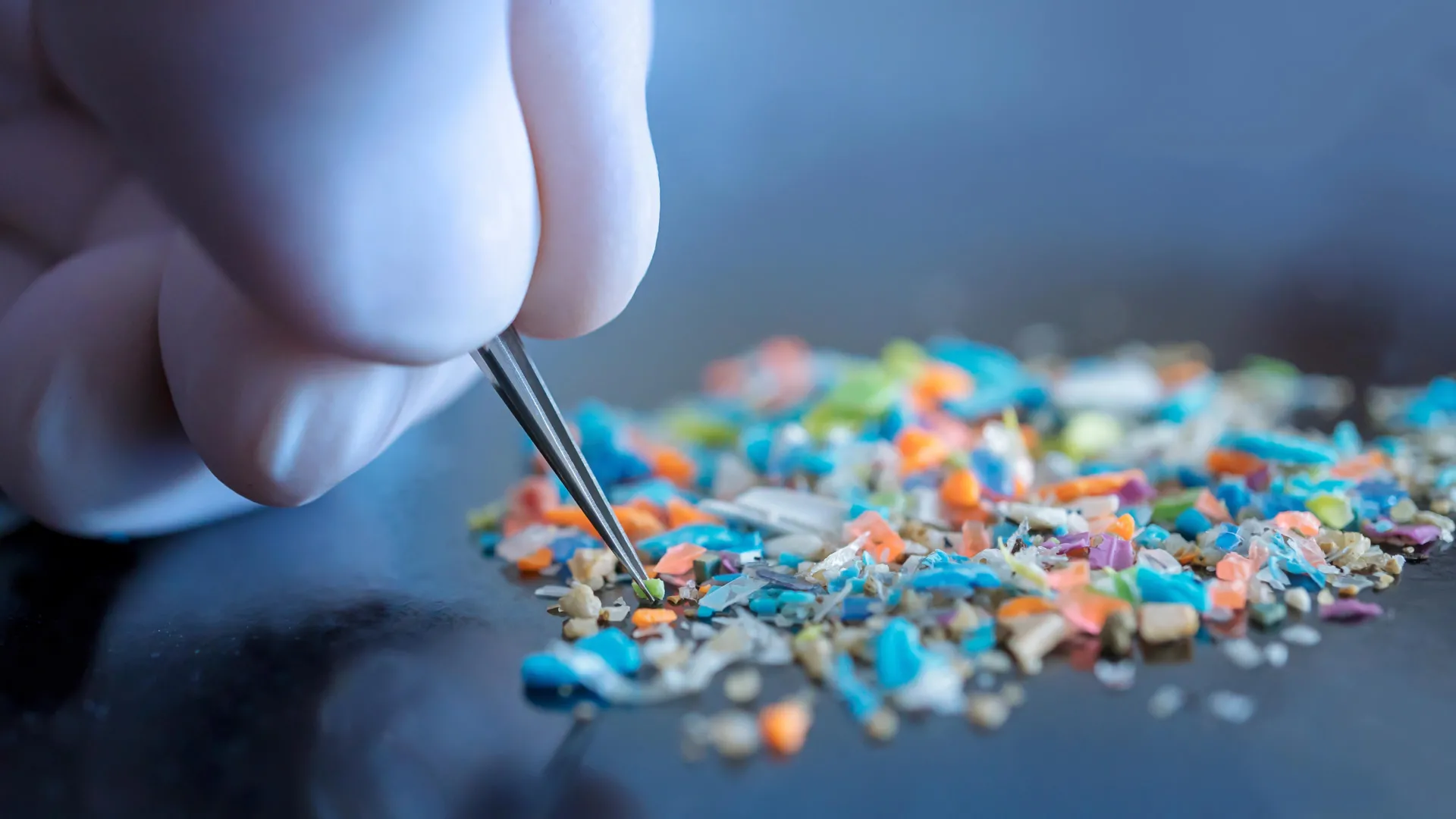
    A University of Michigan study suggests that nitrile and latex gloves commonly used by scientists may make microplastic levels appear higher than they really are.

    Researchers have found that these gloves can unintentionally transfer particles to laboratory equipment used to analyze air, water, and other environmental samples. The source of the contamination is stearate, which is not plastic but can closely resemble plastic during testing. Because of this, scientists may be detecting particles that are not true microplastics. To alleviate this problem, UM researchers Madeline Clough and Anne McNeil recommend using cleanroom gloves, which emit far fewer particles.

    Stearate is a salt-based soap-like substance that is added to disposable gloves to allow easier separation from the mold during manufacturing. However, because they are chemically similar to certain plastics, they are difficult to distinguish in laboratory analyzes and increase the risk of false positives when studying microplastic pollution.

    The researchers stress that this does not mean microplastics are not a real problem.

    “We may be overestimating microplastics, but there shouldn’t be any,” said McNeil, the study’s lead author and a UM professor in the Chemistry, Polymer Science, Engineering, and Environment Program. “There’s so much more out there, and that’s the problem.”

    Professor Clough added: “As microplastics researchers looking for microplastics in the environment, we’re looking for a needle in a haystack, and there shouldn’t be a needle in the first place.”

    The research, led by recent doctoral graduate Clough and published in the journal RSC Analytical Methods, was supported by the UM College of Letters, Science and the Arts’ Meet the Moment Research Initiative.

    Unexpected causes behind inflated results

    The discovery began during a collaborative project in Michigan investigating microplastics in the air. The effort involved researchers from multiple UM departments, including chemistry, statistics, climate and space science and engineering. Clough and McNeil worked with collaborators including chemistry professor Andy Ault and graduate students Rebecca Parham and Abigail Ayala to collect air samples.

    To capture the particles, the team used an air sampler with a metal surface that collects material from the atmosphere. These samples were then analyzed using light-based spectroscopy to determine the types of particles present.

    While preparing the sampling surface, Clough followed standard practice and wore nitrile gloves. But when she checked the results, the number of microplastics detected was thousands of times higher than expected.

    “There was a huge rush to figure out where this contamination was coming from, because we knew the numbers were too high to be accurate,” Clough said. “Through the process of figuring it out, we were able to figure out whether it was a plastic squirt bottle, whether it was particles in the atmosphere in the lab where we were preparing the substrates, and finally to the gloves.”

    Testing the impact of gloves on microplastic data

    To investigate further, the researchers tested seven types of gloves, including nitrile, latex, and cleanroom gloves, as well as methods commonly used to identify microplastics.

    Their experiments recreated typical laboratory situations, including gloved hands touching filters, microscope slides, and other equipment used during analysis. These routine interactions also transferred particles from the gloves to the test surface.

    On average, the gloves introduced about 2,000 false-positive signals per square millimeter.

    “The type of contact we tried to mimic is relevant to all kinds of microplastics research,” Clough said. “If you touch the sample with gloved hands, you may be feeding these stearates and may overestimate your results.”

    Cleanroom gloves have significantly improved performance and emit far fewer particles. This may be because it is manufactured without a stearic acid coating and is intended for use in highly controlled environments.

    Distinguish between real microplastics and false positives

    The researchers also investigated whether they could visually distinguish real microplastics from stearic acid particles. Using scanning electron and light microscopy, they discovered that stearate is almost identical to polyethylene, a common plastic.

    Despite this challenge, Clough and McNeil worked with graduate student Eduardo Ochoa Rivera and statistics professor Ambuj Tewari to develop a method to separate true microplastics from glove-related pollution. These techniques allow scientists to revisit previous data sets and potentially produce more accurate estimates.

    “For microplastic researchers who have these affected datasets, there is still hope to recover them and discover the exact amount of microplastics,” Clough said.

    The findings highlight the importance of chemical expertise in microplastics research, especially in identifying subtle differences between materials.

    “Working in this field is very difficult because plastic is everywhere,” McNeil said. “But that’s why we need chemists and people who understand chemical structures to work in this field.”


    Source link

    Visited 1 times, 1 visit(s) today
    Share. Facebook Twitter Pinterest LinkedIn Telegram Reddit Email
    Previous ArticleJust a few minutes of effort can lower your risk of 8 major diseases
    Next Article Verification is just the first of many challenges for the next CDC director
    healthadmin

    Related Posts

    This overlooked hormone may be the reason your blood pressure doesn’t drop

    March 30, 2026

    Just a few minutes of effort can lower your risk of 8 major diseases

    March 30, 2026

    One of Earth’s most explosive supervolcanoes is recharging

    March 30, 2026

    Lost in space: microgravity disorients sperm

    March 30, 2026

    This breakthrough in quantum computing may not be what you think

    March 29, 2026

    Scientists have solved the mystery of missing ocean plastic – and the answer is alarming

    March 29, 2026
    Add A Comment
    Leave A Reply Cancel Reply

    Categories

    • Daily Health Tips
    • Discover
    • Environmental Health
    • Exercise & Fitness
    • Featured
    • Featured Videos
    • Financial Health & Stability
    • Fitness
    • Fitness Updates
    • Health
    • Health Technology
    • Healthy Aging
    • Healthy Living
    • Holistic Healing
    • Holistic Health & Wellness
    • Medical Research
    • Medical Research & Insights
    • Mental Health
    • Mental Wellness
    • Natural Remedies
    • New Workouts
    • Nutrition
    • Nutrition & Dietary Trends
    • Nutrition & Superfoods
    • Nutrition Science
    • Pharma
    • Preventive Healthcare
    • Professional & Personal Growth
    • Public Health
    • Public Health & Awareness
    • Selected
    • Sleep & Recovery
    • Top Programs
    • Weight Management
    • Workouts
    Popular Posts
    • the-pros-and-cons-of-paleo-dietsThe Pros and Cons of Paleo Diets: What Science Really Says April 16, 2025
    • Improve Mental Health10 Science-Backed Practices to Improve Mental Health… March 11, 2025
    • How Healthy Living Is Transforming Modern Wellness TrendsHow Healthy Living Is Transforming Modern Wellness… December 3, 2025
    • Healthy Living: Expert Tips to Improve Your Health in 2026Healthy Living: Expert Tips to Improve Your Health in 2026 November 16, 2025
    • "The Best Daily Health Apps to Track Your Wellness Goals"The Best Daily Health Apps to Track Your Wellness… August 15, 2025
    • daily vitamin D needsWhy Sunlight Is Crucial for Your Daily Vitamin D Needs June 12, 2025

    Demo
    Stay In Touch
    • Facebook
    • Twitter
    • Pinterest
    • Instagram
    • YouTube
    • Vimeo
    Don't Miss

    New study suggests ChatGPT acts as a ‘cognitive crutch’ that weakens memory

    By healthadminMarch 30, 2026

    Recent experiments have shown evidence that relying on artificial intelligence to learn new material tends…

    This overlooked hormone may be the reason your blood pressure doesn’t drop

    March 30, 2026

    Verification is just the first of many challenges for the next CDC director

    March 30, 2026

    Scientists shocked that lab gloves could be skewing microplastic data

    March 30, 2026

    Subscribe to Updates

    Get the latest creative news from SmartMag about art & design.

    HealthxMagazine
    HealthxMagazine

    At HealthX Magazine, we are dedicated to empowering entrepreneurs, doctors, chiropractors, healthcare professionals, personal trainers, executives, thought leaders, and anyone striving for optimal health.

    Our Picks

    Scientists shocked that lab gloves could be skewing microplastic data

    March 30, 2026

    Just a few minutes of effort can lower your risk of 8 major diseases

    March 30, 2026

    One of Earth’s most explosive supervolcanoes is recharging

    March 30, 2026
    New Comments
      Facebook X (Twitter) Instagram Pinterest
      • Home
      • Privacy Policy
      • Our Mission
      © 2026 ThemeSphere. Designed by ThemeSphere.

      Type above and press Enter to search. Press Esc to cancel.